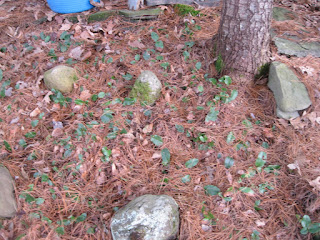
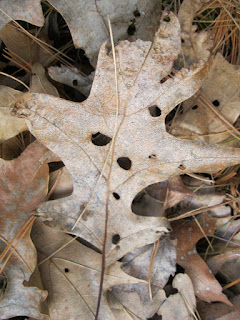
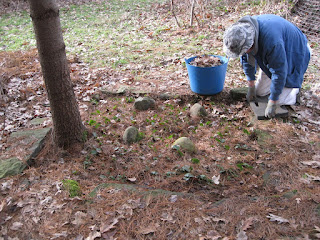
When we first found it we knew nothing about it other than it had sweet smelling flowers in April or May. Some years we found and enjoyed these blossoms while other years no trace of the plant could be found. What we eventually learned was that this evergreen plant exposes its sweet tasting leaves following snow melt. Rabbits are particularly fond of feeding on these leaves. Despite this damage, the plant used the next three years to reestablish itself and flower. That explains the wire cage that covers this plant. The dry stone walls surrounding the cage have to date made it impossible for hungry animals to push the cage aside or slide under it.
Friday, July 8, 2022
Four Patches Of Mayflowers In July
Sunday, June 5, 2022
New Growth
Saturday, April 23, 2022
Another White Pine Hit
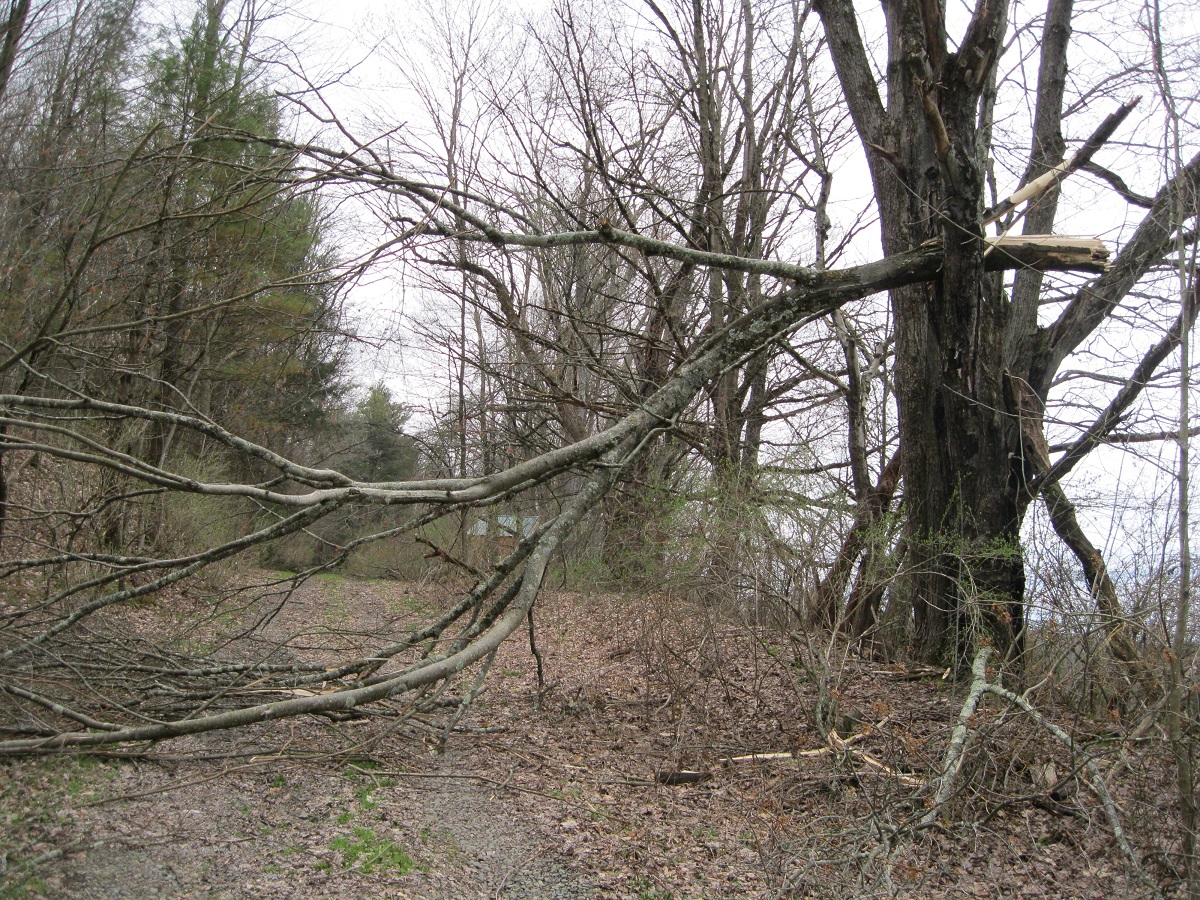
That is Becky wearing her pink hat sharing tender moments with Luca, the good neighbor's dog. We are pleased that this white pine dropped its heavy branches without contacting the stone wall or the arbutus patch. After surveying the damage we realized there is nothing we can do about it today.
Friday, April 22, 2022
Damaged Giant
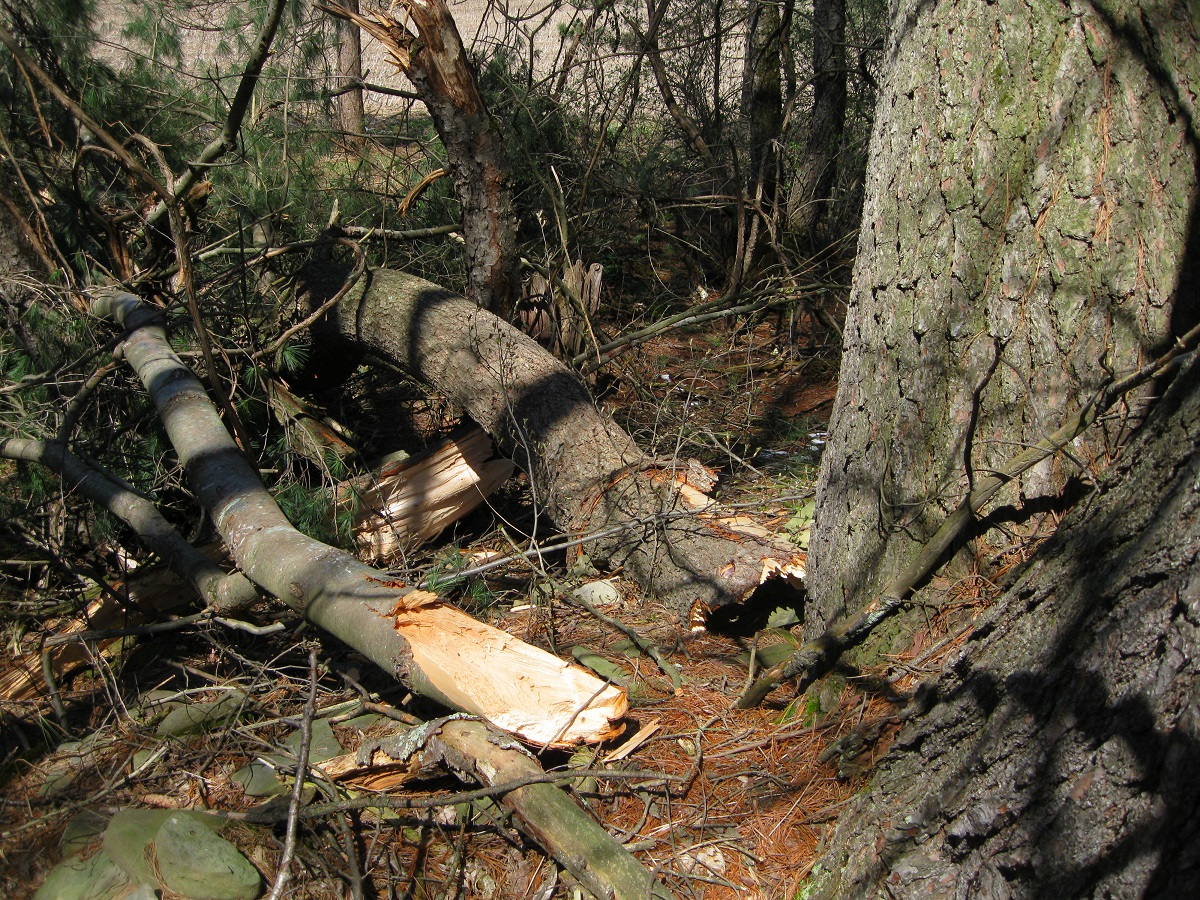
This stately White pine tree grew along the edge of the river bottom field. Fortunately much of it remains intact but it did suffer a huge hit. The ground at the base of this tree features a deep deposit of decayed pine needles. That seemed like a perfect place to transplant Arbutus plants.
Fortunately the broken tree pieces fell toward the river rather than on our land. This loss to the tree is enormous but it appears that enough undamaged tree remains to support continued growth.
This welded wire cage protects the two Arbutus plants placed here. It is designed to keep hungry woodchucks and rabbits away from our plants. The tree debris that fell here was limited to small dead pieces. Both the cage and the plants escaped injury.
Wednesday, March 16, 2022
Beautiful March Day
Thursday, December 16, 2021
Arbutus Cleanup
An old blog post featured a photo of a young plant sporting reddish buds. The text identified this as the from seed plant that grew here following transplantation. That plant and the four moved here have formed a dense mat preventing me from finding the plant that grew from seed. If we remember to look for pink flowers when winter ends we may finally find it. Other plants have reached the edge of the cage. Our plan is to try once more to root cuttings. We now have three different strengths of rooting compound so success may finally find us. We certainly are looking forward to the end of winter despite its failure to find us yet this year.
Sunday, October 24, 2021
Native Promises Of Spring
Everyone's home, church or place of business needed sweet scented air as Spring took hold. Great expeditions into the forests where Trailing arbutus grew were made to harvest the unbelievably sweet scent of these early flowers. Unfortunately the flowers grew from the stem necessitating the removal of much of the plant when the flowers were gathered. Concerned that these massive harvests were endangering the survival of this plant, a group of Massachusetts woman used several years of political activity to push for a law outlawing the harvesting of this plant. Their organization became known as the New England Wildflower Society and this plant still grows in the wild today.
This photo shows flower buds now forming ahead of the Winter snow. This seems risky to me but how else can flowers open so soon after snow melt? Nothing will prevent us from dropping to the ground to sniff their fragrance without harming the plants. Getting back up will not be graceful but the memory of their scent will once again get me past winter.
Lobelia cardinalis is a native treasure that has demonstrated its difficulty surviving in the Southern Tier or Catskill regions of NYS. John Burroughs wrote about its scarcity more than one hundred years ago. This plant is an evergreen that has already started next season's growth. These bright green new leaves will emerge from snow cover undamaged and ready to grow. Early southern warm weather will push these leaves to fill with moisture. Then the freezing night air will turn this water into ice exploding the leaf cells sometimes killing the entire plants. We have seen many of our plants die and are searching for locations that will insulate survivors from death. These plants are growing on our impossibly small piece of river bottom land. Sheltered by sloping ground, the snow cover lingers here. River fog helps to soften the freezing nights. So far so good although one year we did have one close call with frost blackened leaves. New leaves appeared and these plants still survive here.
Sunday, August 1, 2021
Arbutus In The Hands Of Mother Nature
Our accumulated knowledge about Arbutus plants at the time was scant at best. We did not know that there are both male and female plants. As luck would have it, three of these plants are male. The small plant growing with moss eventually matured and revealed her gender in flowers that were different from the others. For whatever reason seeds have never been seen in this group.
This is our second attempt to transplant Arbutus. We gathered more knowledge between the two attempts so this group of six plants contains three male plants and three females. These plants have reliably produced seed for several years but no identifiable from seed plants have ever been found. Attempts to start plants from seed have also been unsuccessful. This plant has taught us that it will proceed only at its own pace and no attempt by any man will move it from its natural schedule. The density of these plants is something never seen among wild plants. The pruning by hungry animals may result in open ground among wild plants.
This transplant site was chosen because of its nearness to a White pine tree and the lane. The center of the lane marks the border between three property owners. The right-of-way users have been slow to demonstrate respect for the limits of their use of this land so the stone wall was built to define the location of the end of the lane. To date these plants have suffered no damage from man nor beast.
When we were digging the six plants seen above, an unusual group of five tiny plants was found. They also were removed from the ground and placed along the inside edge of a protective cage. Several years later two plants remained. Both genders were present and seed production followed their relocation and maturity. Here again we have been unable to find any plants from seed despite the more open ground.
The jumble of stones in the background marks the area where fertile river bottom land borders the gravel and stone filled mess that the glacier deposited between the river and the bedrock ridge. Those stones were cleared to produce fields fit for cultivation. Our land contains no river bottom land but the deep soil formed from fallen White pine needles seems to suit these two Arbutus plants. Little time passed between their initial planting and reaching the edge of the cage. We are eager to see if any of the growth beyond the cage survives.
Age has severely limited our attempts to care for much of our gardens. Many areas have become weed filled but the arbutus were planted in the natural soil under pine trees and remain largely weed free. They are basically on their own now. For a short time we will continue to watch these plants and enjoy their unfolding life cycle. Hopefully the next owners of this land will recognize the special nature of these plants and help them along if that is needed.
Tuesday, April 27, 2021
Worth The Wait
Tuesday, April 13, 2021
Early Arbutus Flowers
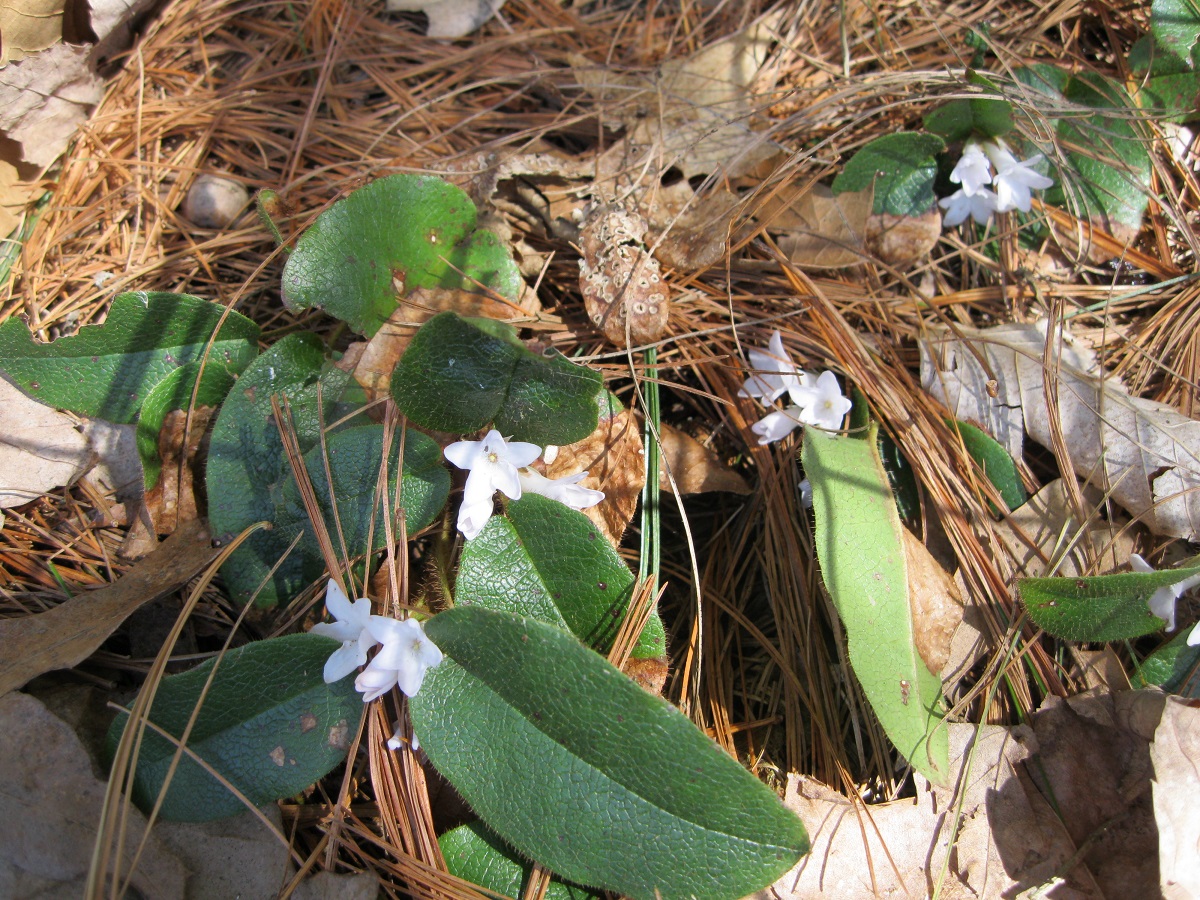
This Spring has been nearly totally lacking rain. Recently we had a two day rain event that resulted in nearly one inch of gentle rain spread across two days. Previously we had a single day of light drizzle. With these early drought conditions the plants have widely responded to moisture. The common name May Flower has been earlier been used to identify these plants but here we are just short of mid April and we have flowers.
Tuesday, November 10, 2020
A Promise For Spring
Friday, June 5, 2020
New Growth
Perhaps my repeated visits with Trailing Arbutus are becoming tiresome. This native plant has a long history of resisting transplanting. A general Google search looking for information on how to move this plant will yield several articles dealing with a European tree that has arbutus in its name. Then my 2014 post dealing with my successful move of this ground cover will appear. First in a Google search might be seen as a big deal. Today we will take a look at just what these plants are up to six years later.
Arbutus is an evergreen plant. Old leaves are dark green and leathery to the touch. Just how long these leaves live remains unknown to me. Dead leaves are rarely seen. Now that the season of flowering is past, new growth is appearing in impressive quantities. Reddish hairy stems extend outward for a great distance. In the center of the picture a side shoot bearing a new leaf can be seen. The point of junction between the new stem and new leaf is where flower bud clusters will appear later this Fall.
Now that these wild plants have firmly established themselves we mostly leave them alone. Fallen pine needles remain where they fell since we no longer remove them intending to keep the Arbutus leaves in full daylight. This natural sight is seriously marred by the wire cage that covers each planting. These plants would not exist without this protection. Both woodchucks and rabbits have heavily eaten these plants in the early Spring when other green plant growth is rare. It is likely that these cages are the reason why my transplants survive when others failed.
Our late Winter weather was brutal this year. Repeated hard frosts and numbing cold did major damage to many plants. Arbutus blooms early and is equipped to deal with harsh weather. Its leaves remain undamaged and the flowers were beautiful but developing seed clusters have been hard to find. That may have been the result of missing pollinators. These female flowers were unfertilized so the plants continued survival depends on the new leaf growth and next year's blossoms.
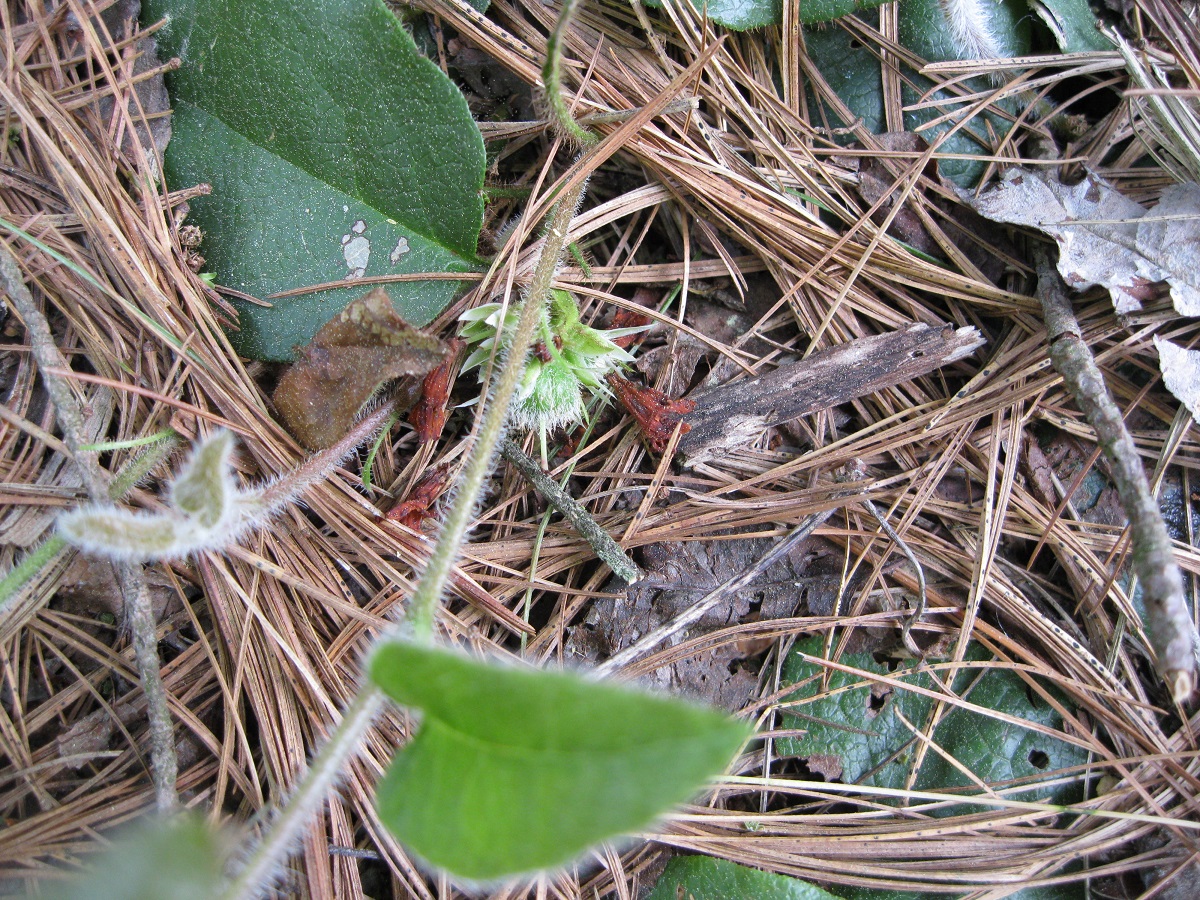
Only one developing seed cluster was found after a careful search of all four different plantings. In the past seed clusters have appeared earlier. The two flower remains at the top of the cluster are developing seeds but are days behind the others. In the past seed capsules have appeared much earlier. We have watched seeds form here for many years but have yet to see a new plant from our seed appear. The dense growth would make finding a new plant difficult. Our attempts to grow new plants from harvested seed always ended in failure while reports of greenhouse attempts are successful. We are at the point in our lives where just enjoying these plants as they grow on their own is a special pleasure. The promise of those fragrant flowers makes the spring of 2021 something to anticipate.
Tuesday, May 5, 2020
Hope
This certainly is a time when finding a reason for hope is a good thing. Actually finding it in the image of Arbutus blossoms where the sweetly scented flower cups have been pulled away from the plant might bring my judgement into question. The first time I was confronted with this mess, devastation was the emotion that presented itself. Now I know that pollinating bumblebees pull the outer flower part away as they exit. That part of the flower is no longer needed. Seeds are almost guaranteed to form on these seemingly damaged flowers. Just why huge insects are part of the pollination process of these rather tiny blossoms is a question without an obvious answer.
That this image greatly lifted our spirits requires explanation. Last year this ground held an impressive planting of Bloodroot plants. They experienced a fantastic season of growth with huge leaves and mature seeds. Then the deer herd walked or danced across our shade garden. Broken plants littered the ground and it appeared likely that deer hooves had pierced the corms. Many days have passed with our daily inspections finding no sign of these special plants. Then this single leaf, possibly wrapped around a flower bud, pushed itself above the soil. More may follow but if this is the only plant that appears at least our Bloodroot is still alive.
Trilliums end their growth cycle soon after the trees open their leaves. The deer's later visit might have pierced the corms and any sign of growth here was long in coming. These leaves show signs of frost damage but appear to remain functional. Circular wire cages now surround nearly all of these plants. Our hope is that the congested area will prove unpleasant for the deer.
Right now living in New York State is not ideal. As a red-blooded American I bristle at the idea that the government gets to decide what is necessary for me. That being said, I agree with the "Do no harm!" directive. Before Covid-19 when only the winter cold kept me housebound, I ordered some native plants intending to plant my treasures in the spring. Anyone reading this blog knows that our plant addiction is serious. So we donned our masks and went to a place where we knew we could find the plants we wanted. Everyone stayed outside in the fresh air and sunshine. We got the plants we needed and paid the money that was due. Where is the harm in that?
New York's travel ban has left us confused. Despite instructions that I am to stay home, Greyhound buses still travel from the Port Authority in NYC to Syracuse. The Binghamton mayor has asked that these buses not stop in his city and that request has been honored. We have been limiting our car use to grocery shopping. Liquor stores remain open under the State travel ban regulations but many plant nurseries remain closed. Somehow thirty-one new plants have appeared here. I do not consume alcohol but remain addicted to new plants.
.