Showing posts with label trailing arbutus seed clusters. Show all posts

Sunday, June 5, 2022

New Growth


Trailing arbutus has been a center of our attention for the twenty-eight years that we have been here.  Our small naturally occurring patch is still here and with its wire cage cover it no longer occasionally disappears but its poor location keeps it small.  The plants in the first photo are our last successful attempt to transplant this native treasure.  Placed under a huge old White pine tree, these Arbutus live on a deep deposit of rotting pine needles.  The dark green leaves are perhaps several years old.  The light green leaves growing from fuzzy stems are new growth.  Today just seemed like a good time to look in on these plants.


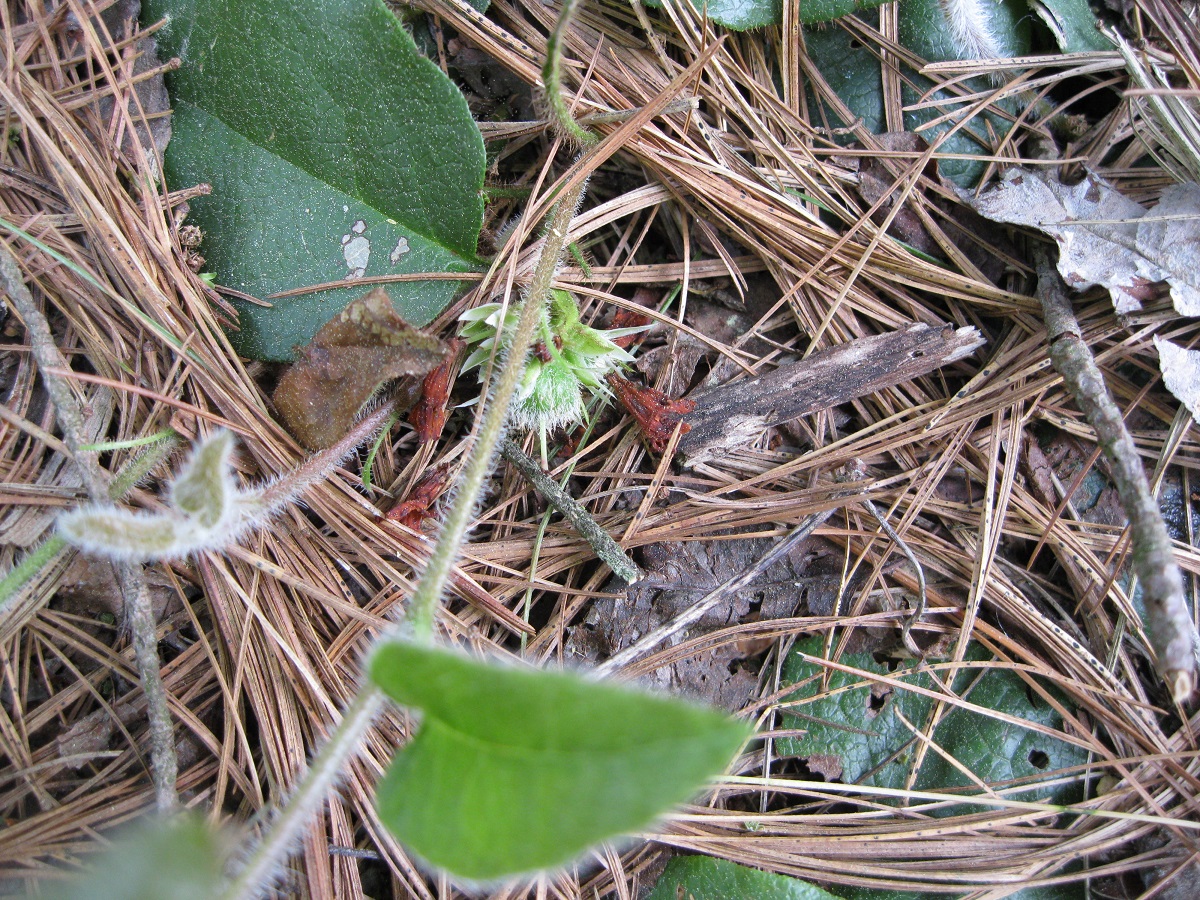
This picture clearly shows different stages of new growth.  The sizeable bright green leaf is new growth but is older than the new stem to its left.  It has a new leaf that has just started to grow.  In the center of the photo, at least two seed berries can be seen.  They are flanked by the remains of  blossoms that were not fertilized.  This plant produces viable seed every year but we can not be certain that any new plants appear here.  Their first year's growth consists of three small leave while the two mature plants have spread filling the protected area under the cage.


These plants grow adjacent to the lane far away from our other plants.  The center of this photo shows many female flowers that have failed to grow seeds.  Earlier this year I watched a bumble bee enter these open blossoms.  She was much larger than the flowers and frequently pulled the petals from the flowers as she backed out.  I saw this ground covered with white petals.  That in itself does not guarantee sterile flowers but some factor  left these clusters sterile.  In the upper right corner of the picture a developing seed cluster is visible.


This is the planting under the huge pine tree.  Old leaves are dark green while new leaves are bright and light.  This combination of old growth and new leaves is what makes it impossible to spot new growth from seed.  We are pleased that these two original plants are doing so well.  New growth now extends beyond the cage inviting us to try again to root cuttings and drawing in rabbits to feed on these apparently tasty leaves.  We were very lucky as this old pine did suffer breakage from that heavy snow storm but none of the fallen branches hit this cage.
 

Monday, May 27, 2019

Making Seed


It seems that the prime directive for all living things is to establish the next generation.  We have worked with Pinxter bushes for years but have never witnessed their interactions with a pollinator.  That all changed yesterday.  While working in close proximity to these delightfully scented beautiful flowers, a bumble bee appeared and spent several minutes interacting with the flowers.  Their sexual parts are brazenly displayed with five pollen producing anthers.  The single longer stigma is visibly moist ready to grab and hold pollen.  The bumble bee is huge by comparison and the exchange of sexual cells was accomplished while airborne.  Occasional contact with the flower petals sent everything rocking.


In the upper left corner a single wilted blossom can be seen dangling from the long filaments and single style.  Investigation revealed that the filaments came away with the falling flower.  Only the style remained firmly attached to the ovary.  It seems likely that the pollinating bumble bee dislodged this blossom.  Since the flower petals play no part in fertilization, a seed capsule may develop here.  These flowers have been open for only two days and the business of creating the next generation has been completed.  The beauty and scent of these amazing flowers is mine to enjoy alone since the work of the bees has been done.


Arbutus had an unusual year here.  Some flowers opened early while an occasional late flower can still be found.  Two developing seed clusters are visible near the center of the picture.  When the seeds are mature the five green outer layers will peel back revealing a white berry covered with tiny black seeds.  Ants find the white substance sweet to eat and they carry pieces of it back to their nest.  The seeds are cast aside as ants feast on the white berry.  We have been tempted to try a taste but so far have resisted.


These recently purchased Bloodroot plants were displaying their seed pods when purchased.  Rows of seeds line the inside of the cylindrical seed pods.  Each seed carries a elaiosome whose function is to attract ants.  The tasty substance is eaten as the ants cast aside the seed.  A difficulty with this system of seed dispersal is that all of the seeds are dropped near the parent plant.  A tight cluster of plants will follow making Bloodroot a civilized garden specimen.  The background rock was set at an angle to divert rainwater to the area where these moisture loving plants were intended to grow.  Ants keeping the seeds close by fits perfectly with our plans.

Sunday, May 15, 2016

Arbutus Seed Clusters


The season for trailing arbutus flowers is drawing to a close.  In a few different locations, some older blossoms have been found hidden under covering leaves.  Their location out of direct sunlight may be responsible for the longer season.  These flowers are not the only things here showing marks of age and we are still taking moments to savor their mature scent.


We were delighted to find immature seed clusters moving toward the formation of viable seeds.  Soon after the pink tinged flowers first appeared here, the blossoms littered the ground having been separated from the plant.  Pollen needed to be deposited on the now blacken tips of the rod like structure protruding from the center of the seed berry.  With the flower petals lying on the ground, the pollen receiver was fully exposed for easy access.  The timing must have been exactly right as every blossom in this cluster was fertilized.  That claim may be an exaggeration since the leftmost flower remains are hidden from view.
 

These seed berries are on a different plant at the other end of this group of transplants.  The brown tipped spent flower in the center was not fertilized and will now wither away.  The hairy stem at the right edge of the seed cluster may be the beginning of new growth.  We did see new growth just beginning to appear on other plants.  It is impressive that these female plants develop seeds while sending out new stems and leaves.  That seems like a formidable task for any plant.

Once again we missed seeing pollen laden male flowers.  This is a busy time of year for both the plants and the gardener so new pollen remains on the list of things for us to see in the future.  These plants still show the impact of the very dry fall last year.  Many of the blossom clusters formed then displayed a dead brown appearance.  Some can still be found in that exact same state.  We did enjoy many open flowers but the overall display was smaller than usual.  We hope that the hard freeze forecast for tonight has no impact on these developing seeds.

Sunday, May 17, 2015

3 For 3


A number of basic errors were made in the placement of these six transplanted arbutus last year.  The distance separating the individual plants is small.  They do now have a year's additional growth but that might have been anticipated.  Two plants in the foreground are both female and that was known at the time of planting.  Alternating male and female plants would have made pollination more likely. The old cage was small last season and needed replacement before new growth appeared.  Now there is twenty-five square feet of protected ground available for new growth.  The three stones inside the cage are intended to keep the cage wire above the plants should some critter walk across here.  The row of stones at the base of the wall will keep the cage firmly pressed against the tree trunk and defines a suitable walkway for people.  Low stone walls will be placed along the remaining two sides of the wire cage to hold it in place laterally.  When they are finished these plants will be safe from foraging rabbits and woodchucks.


The time for arbutus flowers has quickly passed.  With this year's early excessively warm daytime temperatures and a complete lack of rain, these sweetly scented blossoms lasted just over one week. That seems unusually quick and we did not spend nearly enough time inhaling their aroma.  Last year this process moved more slowly.  Now we will have to wait for nearly a full year for another opportunity to adequately enjoy their fragrance.


Three of these plants are female and all are sporting tiny seed capsules.  Two of the plants had pink flowers and their seed berries are also pink.  The white flowered plant has white seed clusters.  This color connection is simply an observation.  We make no claim about an actual cause.  Two hairy stems mark the beginnings of new plant growth.  Forming seeds while growing new plant parts must make this the busiest time of the yearly cycle for these female plants.  There are at least three blossoms shown that did not set seed.  None of them now display the style that would have collected pollen.


These two seed clusters prominently show their styles.  A five pointed star can be seen at the end of the right most style that is still firmly held in the center of the seed berry.  The long profile of the other style shows just how deeply in the base of the flower the seed berries are located.  The tip of the style was well inside the opened flower.  The developing seed berry may have pushed the spent blossom clear.  Cast off flowers litter the nearby ground.

We still have seen no sign of new plants from the seed formed last year.  Perhaps other options will give us new plants from seed this season.  A huge white pine has been found growing on the end slope of the kame terrace.  That location would give us a chance to plant arbutus on a slope.  There is still much to do and learn about this plant.