Showing posts with label trailing arbutus flowers. Show all posts

Friday, April 22, 2022

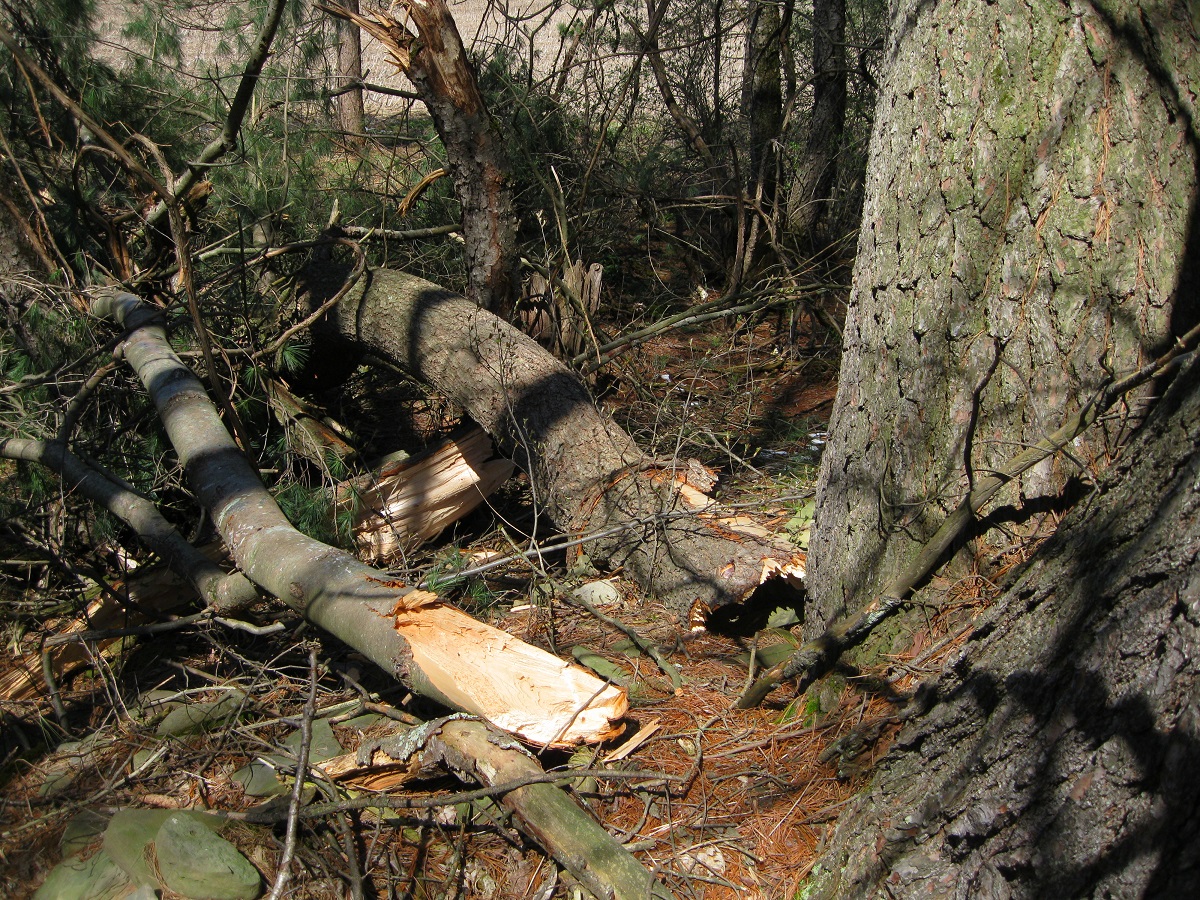
Damaged Giant


With any luck the power will remain on.  Our first outage lasted for twenty-four hours and our close to needing a  refill propane tank prompted no action from me.  Twelve hours later the power went out again with that outage also lasting twenty-four hours.  At that point we desperately needed a delivery. The Mirabito truck arrived here before lunch.

This stately White pine tree grew along the edge of the river bottom field.  Fortunately much of it remains intact but it did suffer a huge hit.  The ground at the base of this tree features a deep deposit of decayed pine needles.  That seemed like a perfect place to transplant Arbutus plants.


Fortunately the broken tree pieces fell toward the river rather than on our land.  This loss to the tree is enormous but it appears that enough undamaged tree remains to support continued growth.

This welded wire cage protects the two Arbutus plants placed here.  It is designed to keep hungry  woodchucks and rabbits away from our plants.  The tree debris that fell here was limited to small dead pieces.  Both the cage and the plants escaped injury. 


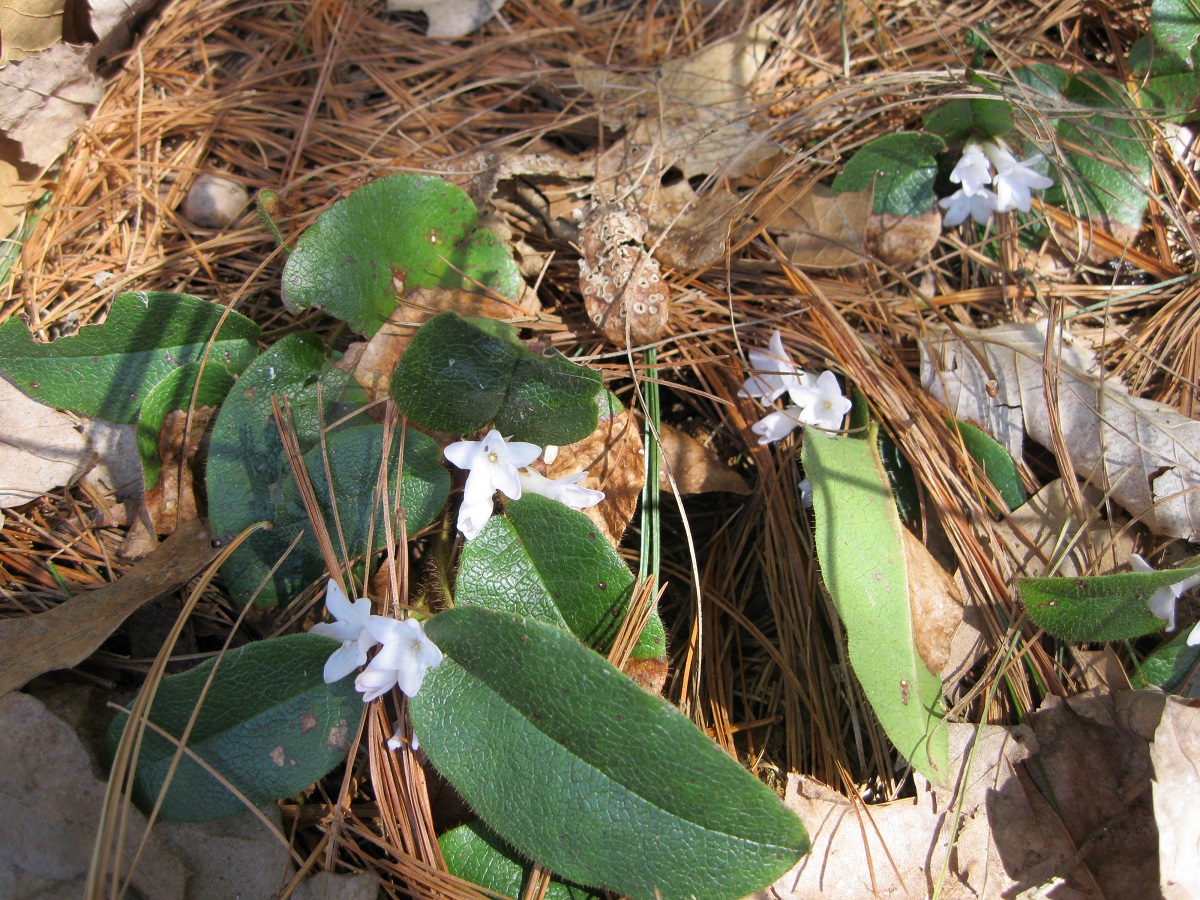
Our first Arbutus transplants were placed further up the hill under a much smaller White pine.  Our normal path to these plants was blocked by downed Sumac trees.  No damage was done to the plants and we were surprised to find open flowers.  Only a few of the buds are open but they created a welcome display.  Age related decline prevented me from getting on the ground to smell these unforgettable sweetly scented blossoms.  Perhaps that will be part of tomorrows visit here.  
 

Wednesday, April 29, 2020

Warm Rain & Sunshine


Warm rain is a term without specific meaning.  For us this year it refers to rain without snow or sleet mixed in.  This group of transplanted Arbutus has been holding its flower buds tightly closed for weeks.  Daytime temperature in the mid sixties after plentiful rainfall finally persuaded these plants to display their open flowers.  So vigorous was their presentation that their scent could be enjoyed while standing.  Still, the fragrance if nose was brought close to open flowers was worth the effort.


All of our plants came from the same place.  The other three groups, as well as our wild patch, display only white flowers.  The only disadvantage to white flowers is the difficulty our camera has photographing anything white.  These flowers have a rather deep central depression. and the camera frequently cannot find clear focus.  An overcast day limited the amount of light hitting the flowers resulting in this sharp photo.  The eye sees a darker pink that completely colors the blossom but this is an impressive picture.


Arbutus plants exist as either male or female.  A male plant can be identified by the five structures that resemble grains of wheat.  Tucked deep at the base of an open blossom, feeding insects destroy this flower part as pollen is gathered.  The blossom in the lower left of the cluster still holds its manhood.


There is so much that we do not know about our plants and their natural role in providing for the next generation.  Bumble bees are frequently drawn to open blossoms.  This one features a seldom seen orange stripe.  The size of both the bumble bee and the depth that must be crossed to get access to the pollen explains why the grains are destroyed.

Tuesday, April 21, 2020

Covered Lilies


Following years of self examination and reading, a retirement life centered on growing plants was planned.  The past two decades have been wonderful beyond description.  The blog record of Stone Wall Garden will serve me well when reality pushes me to a retirement community.  Part of each day there will likely be spent reading and remembering the unfolding of these years and the plants that delivered both challenges and pleasures.

One bit of my gardening madness focused on Oriental Lilies.  Several mail order catalogs listed them as hardy to climate zone four.  Year after year bulbs were planted and their new growth frozen dead by frosts.  Sometimes slow to see the obvious, it took far to long for the need of protective covers to register.  Now the late afternoon features placement of plastic buckets and their morning removal if forecasted temperatures permit.

The first picture features the remains of a purchased assortment.  The catalog illustration featured the variety Lovely Girl.  Its combination of white flowers with yellow splashes and sweet scent could not be resisted.  This variety needs much warmer winter temperatures and like many of my purchases did not survive here.

Included in the collection was an unnamed variety whose garish coloration would suggest placement outside of a French House of Pleasure.  The brightly colored flowers were scentless but the plants were hardy.  That single bulb has multiplied wildly giving me four plantings similar to the one shown.  Division is clearly needed but since I find the flowers unattractive it will most likely not happen again this year.


Late Morning is the varietal name of these plants.  They have been under cover for several nights but one night featured temperatures in the mid twenties resulting in frozen but not frosted leaves.  The formation of frost releases heat with the change of state and that does burn on occasion.  These five plants will present a covering problem in the near future.  Plant growth will exceed the height of the covers and that will be a problem if late May frost is likely..


Three Golden Stargazers were placed in front of the house where nights are warmer.  Two quickly died and the remaining plant had a recent great year resulting in three daughter plants.  These flowers are special enough to warrant a huge plastic garbage can to keep the frost off of tall plants.


  Scheherazade is the varietal name of these plants  Here again their bright colors are not found to be appealing.  So far they have refused to die and were covered with two five gallon pails.  The leaf damage shows their sensitivity to cold despite covers.  Placing bottles of warm water under the covers has been considered but there are limits on what will be done.


Simplon Lilies are appealing in several ways.  Their height places pure white flowers at my nose level when I am standing.  Not having to bend over or kneel to sample the scent of flowers has become a real plus.  The flower count is as impressive as the purity of the blossoms.  Then there is the scent.  Sweet beyond description would prohibit their use as indoor decoration but outside distance can help keep the fragrance level pleasant.  These bulbs need to be reset as their chosen placement will make covering with a single garbage can impossible.

When viewing this post, a search rectangle can be seen in the upper left corner.  Enter any flower name there and you will be taken to past posts.


Today's pictures feature mostly bare ground with the promise of future beauty.  This Arbutus planting shows beautiful flowers today.  Just seeing them and taking in their scent removes the troubles of today at least for the moment.

Wednesday, April 15, 2020

Mayflowers In April


Epigea repens has captured and held our interest for many years.  The oldest book in our collection  describing it as impossible to transplant was published in 1898.  It continues to be seen that way today.  In 2011, four Arbutus plants, each small enough to be held in the palm of my hand, were dug with permission and placed here under a White Pine tree.  A fifth plant soon grew from seed that was likely in the soil mass holding one of the plants moved.  Subsequent growth has stems growing over other stems so no count can be made telling us just how many plants now grow here.


It is not uncommon to find open flowers in April.  We found this flower several days ago when its complete lack of scent told us that the flower had just opened that day.  The green structure in the center of the blossom identifies this as a female plant.  We did not know that Arbutus plants can be either male or female when we dug these.  It was just dumb luck that have at least one of each gender here.  Mature seed is found here each year.


Buoyed by our unexpected success transplanting Arbutus, we tried again three years later.  This time we dug three plants of each gender.  Despite the yearly appearance of seed, we have yet to see a new plant growing from seed.


This rock intended to support the protective wire cage appears in many of my pictures.  The combination of stone, pine needles, Arbutus leaves and flower buds captures the eye every time.


When the transplants were dug in 2014, a cluster of tiny plants could not be left behind.  After two years growth, we found two plants large enough to move.  These were also placed under a White Pine tree that was huge.  This planting site features only generations of rotted pine needles.  Arbutus prefer to grow in very poor highly acidic soil but this natural ground features nothing that resembles garden soil.  These two plants have put out long stems of new growth but nothing like our other plants.  We took the soil as it was found every time since we believe that rich garden soil kills these tough plants.  Once again our luck gave us one plant of each gender.  Here again we see seeds every year but no new plants from seed.  These plants were placed just inside of the property line.  An ancient stone wall backs these plants.  Each year I intend to rebuild  a section of the wall and this may be the year that it happens.


This is our one naturally occurring Arbutus patch.  Despite its decades of existence here it remains small.  Poorly situated in the lumpy overburden that was pushed aside to open a gravel bank, these plants faced another enemy.  One late winter my trips to the mailbox took me past these plants.  One day a few rabbit pellets marked the spot where the rabbit had been feeding on the evergreen leaves of Arbutus.  With each passing day the size of the waste pile grew while the plant parts were totally consumed.  Working with no visible above ground plant growth, it took three years before these plants regenerated the necessary growth required to produce flowers.  Now all of my plantings are protected by a low dry stone wall that extends beyond the edges of a wire cage.  No woodchuck snout is going to be able to push these cages aside.  Opposable  thumbs are needed to lift the cages free allowing the nose to be pressed near the ground while drinking in this unique and wonderful scent.  Every year as these flowers fade I promise myself that I will revisit Arbutus again the following year.  Once again I have kept that promise.

Friday, May 4, 2018

Early May Wildflowers


The plant killing horrors of this year's March weather have been replaced with numerous native ephemeral treasures carrying out their spring life cycle.  This photo shows several stages of Blood-root flowers.  Upper left finds an older flower beginning to drop its petals.  Upper right shows a newly opened blossom.  Center left contains a mature bloom that has lost nearly all of its yellow pollen.  Center right has a perfect flower.  Lower left displays a young seed pod against the backdrop of a leaf.  Drought took Blood-root flowers from my garden while they flourish in Irma's woods. Our order of new plants will be here any day now.  The new woodland garden down by the road is waiting!


These early Arbutus flowers will soon be joined by many others that are still closed buds.  Transplanted on our land several years ago, these flowers are highly prized.  The major allure here is their scent.  The good news is that we can still stand up after dropping to the ground to draw in the memorable aroma.  The native stone was placed to support the protective wire cage that is the reason these plants still flourish.  Being evergreen carries some risks.  Rabbits devour unprotected Arbutus plants when the snow first begins to melt.  Insects ate the only partially destroyed leaves.


Irma's woods lie on a south facing sloped bedrock ridge.  The concentrated warmth of the sun there has these Trout Lilies at their height of bloom.  Our plants are just beginning to release their buds from the tightly wrapped leaves that safely carried them through several inches of forest soil.  Soon we will find similar flowers closer to home.


The steeply sloped roadside bank revealed flowers that we have never before seen.  Wild Ginger keeps its flowers hidden from sight close to the ground.  Looking uphill we finally got to see these flowers.  Flies are the pollinating agent so these flower's scent is much like rotting mouse meat.  We passed on a chance to sample that odor.  At home, our transplants have yet to open their tightly closed leaves.  The pictured leaves will soon be much larger hiding the flowers from prying eyes.


Here we see a single Spring Beauty flower behind a row of Hepatica flowers.  It is uncommon for the digital camera to capture the color of a Spring Beauty flower.  Usually all that is seen is white.  Most of the leaves in this picture are Ramps. Sharp-lobed  Hepatica flowers precede their leaves which can be seen here just beginning to unfurl to the right of the Spring Beauty flower.


These freshly opened Hepatica flowers show both their blue petals and white pollen.  Opening leaves surround the flower petals in three places.  Apparently, younger plants have fewer leaves with blue coloration.


Several of these multi-flowered stunning Sharp-lobed Hepatica plants occur singly across the roadside bank.  Their bright pure white color stands out in sharp contrast to the dull brown of decaying fallen tree leaves.  It is possible that older plants have many more flowers.  Some of these larger plants were growing up through the mud filled ditch at road's edge.  I really wanted to dig them up and give them a proper home.  Responsible reason prevailed and they remain where nature planted them.


This is the more common coloration of Spring Beauty flower pictures.  The camera misses nearly all of the delightful pink color. The plant in the upper left corner of the picture shows off  the plant's small  green  leaves.


This is the promise of more to come.  This white Trillium was fall planted in our new woodland garden.  Flower buds can be seen on this newly emerged plant.  It looks like two flowers will appear here during this plants first year with us.  We will need to return to Irma's woods as the Trillium there have yet to open their flowers.  Recent logging will have severely reduced the vast number of plants there but the opening of the forest canopy will aid in their return.

We found our spirits lifted by these early flowers.  Decline that accompanies age is making working in the dirt more difficult for us.  That reality may have heightened our pleasure in finding these flowering plants existing totally on their own.  Many more will follow as the month unfolds and we will try to see them all.  Their allotted time each year is short but they make the most of each day.  We will try to do the same.

Sunday, April 17, 2016

Worth The Wait


One of the advantages of these no film cameras is that large numbers of images are essentially free.  Arbutus flowers present several challenges to any camera.  Tiny blossoms with a deep central cavity make finding a clear focus nearly impossible.  Some part of the image is always blurry.  White coloration is not handled well by these cameras.  These pictures do not come close to showing the colors that I saw this morning.  Light pink splashes of color were seen on nearly every flower but cannot be seen in the photos.  This morning the sun had not yet cleared the ridge when these pictures were taken.  The first image shows the promise of splendid displays yet to come.


These flowers present much more pink color to the eye.  One blossom has already been knocked from the plant.  Many of the bud clusters are under the fallen pine needles.  One must do a little staging to bring the flowers into view.  Despite working reverently and carefully, I may have dislodged the fallen flower.


Here the base of a male flower is in focus.  The tan grains will soon produce pollen.  Clear or white moist appearing hairs line the walls of the tunnel that leads to the base.  Soon the tan structures will be covered with yellow pollen.  This has only been seen in the photo of another as we have to date always missed it.  Arbutus is a plant that is built on five parts to many features.  Five petals make each flower.  There should be five of the tan pollen producing grains but that is not what the photo shows today.


This is the state of the transplants that were moved here two years ago.  I was unable to carry water to these plants last fall and feared for the condition of the bud clusters.  Many remained brown and shriveled but some managed to open flowers.  Fallen white pine needles covered the lower parts of each plant.  Light penetrates the needle cover and some insulation helped these plants survive our snow-less winter.
 

Here is the entire patch.  Six transplants were placed entirely too close together but each can almost be seen.  One the left edge of the picture, two plants lie between the stones.  On the right edge, three plants are in a line between the stones.  The center plant is still small as pine sap killed several leaves during its first summer here.  The single huge plant centered at the top completes the group.


This may be our best photo yet of arbutus flowers but more will follow.

Thursday, May 1, 2014

Arbutus In Abundance


This land that belongs to friends is the source of our dug from the wild arbutus plants.  Perched atop a rocky East West ridge adjacent to the Susquehanna River, this area was cleared for their house decades ago.  Green grass grows on fill that was trucked in to support a lawn near the house.  The brown barren appearing ground is what forest growth created after the glaciers smeared this ridge with their muddy load.  The dark green patch in the foreground is arbutus.  Why it flourishes here is a mystery to me.  The soil is beyond poor and the area is kept mowed.


This view looks North down into the river valley.  A nearby road cut reveals the shale deposit that underlies this ridge.  Mixed hardwoods interspersed with pines are the native growth here.  Despite the steepness of the slope, these woods are regularly logged.
 

This huge patch of arbutus grows on exposed ground among moss, lichens and stones.  Compared with plants that grow in more favorable locations, these have much smaller leaves.  Despite their puny overall appearance, they are dense and covered with flowers.  This may be a desperate attempt to procreate since they exist in perilous conditions possibly near death.  Seed formation is rampant with new plants appearing everywhere.


Wild strawberries, moss and various lichens surround this impressive display of arbutus flowers.  Five small plants, each growing at some distance from others, have been marked for digging.  Three female and two male plants will be moved to a spot under a white pine tree.  We will wait a few more days before making the move to allow for natural pollination of the female flowers.  Confident that our digging method will result in plants that survive the move, we would like to move viable seed as well.  The move will happen soon and our method will be recorded here.

Monday, April 16, 2012

Inclination Impact


Arbutus grows here in two different places.  About fifty yards separates the two plantings but the lay of the land made a twenty-four day difference in the appearance of the first open flowers.  The plant with the earlier flowers grows at the base of a west facing slope.  This time of year it receives direct sunlight all afternoon.  Early abundant warmth initiated the first open flower more than three weeks ago.  Subsequent hard freezes had no impact on the open flowers so there was no apparent down side to the early flowers.  We do not know if its pollinators were active early.


This naturally occurring arbutus plant grows at the base of the same hill but here the slope is to the north.  Its placement in a depression in the ground prevents this plant from receiving any direct sunlight this time of year.  As the sun climbs higher in the sky this plant will receive direct summer sunlight but now it grows in constant shade.  The difference in bloom time will allow us to enjoy the scent of arbutus flowers over a period of seven weeks.


With the lilies I have made a deliberate attempt to delay the start of active growth.  Lacking a convenient    north slope, artificial shade helps keep the plants dormant.  Three rows of potted lilies wintered here and one row is still in the shade.  Sunnier placement of the front row is causing those plants to begin growing earlier than the back row, but they are all way behind the plants in the garden.  Here the goal is less time exposed to late freezes and frosts.


These lilies are growing out in the garden in full sun with a southern exposure.  They have been up for nearly three weeks.  Cold nights have found them under plastic buckets  to avoid death by freezing.  Many of the younger green plants still show frost burned leaf tips.  Their early start may make it impossible to cover them later when they will have grown taller than the covering containers.

To hedge my bets I placed two clumps of these lilies in three gallon plastic pots.  The potted lilies have spent  cold nights safely in the basement.  Our usually reliable frost free date is June first so these potted lilies may have flowers open before they can be safely returned to the garden.

Planting the arbutus in more sun helped to increase the bloom time we enjoy, and planting the lilies in the shade helped to keep them from emerging too soon. A change in inclination has a definite impact.