Showing posts with label early meadow rue. Show all posts
Monday, May 16, 2022
After the Thunder Storm
Saturday, April 9, 2022
April Weather
Tuesday, April 6, 2021
First Native Flower
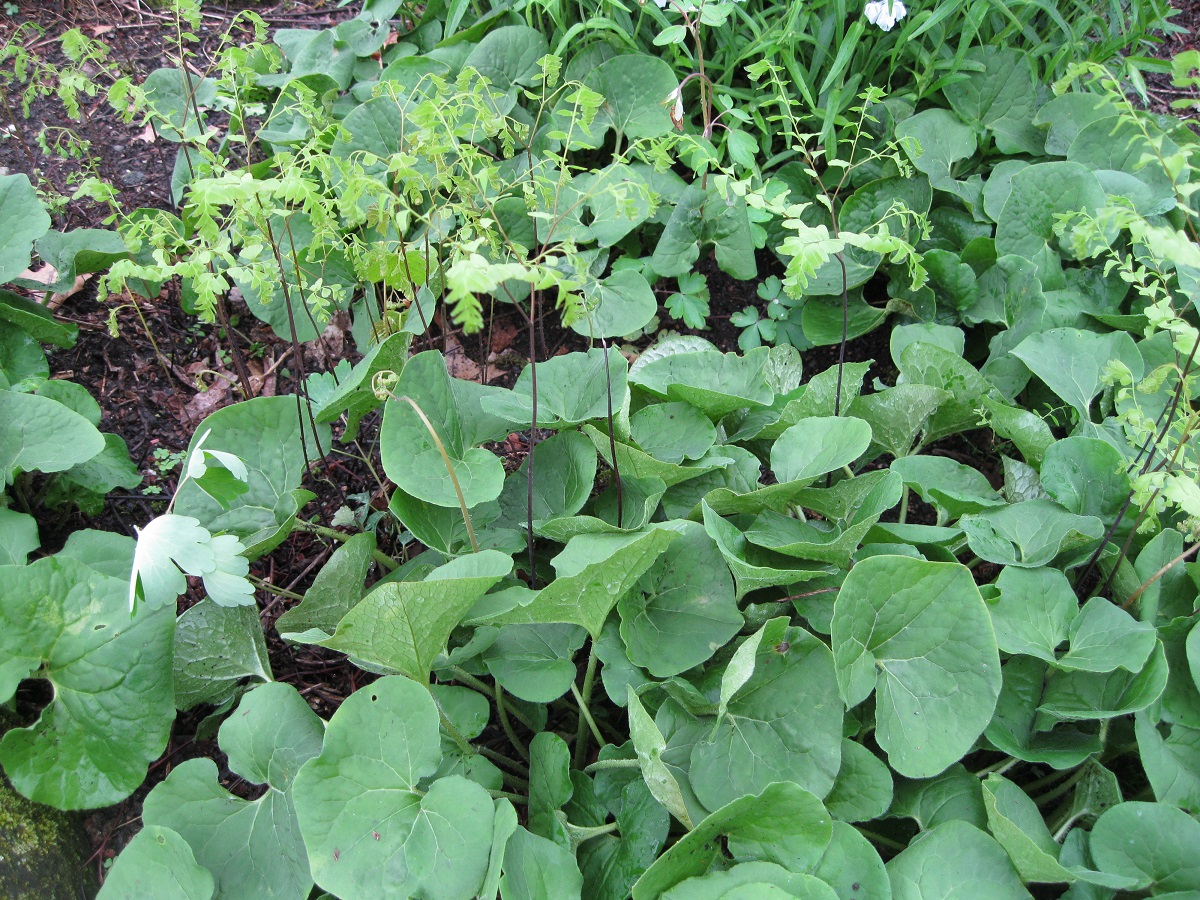
The newly emerged male plant appears more subdued than the female. Flower structure will be different and we will closely watch the growth cycle of these plants.
Bloodroot is another early blooming native plant. Weather has not been kind to these plants for the past two years. Our search today did not produce a sighting of an emerging plant at either Irma's woods or our garden. Bloodroot is usually in flower close to the time of the Hepatica but this year no trace of these plants has been found. Spring rainfall has been missing here and that may be a factor in the lack of these plants. Deer made their presence know here with many hoof prints and holes where our Bloodroots were planted. New plants were Fall purchased and planted but to date there is no sign of plant growth here.
Thursday, April 2, 2020
Our Shade Garden
Unlike yesterday's pictured plants that were all photographed as they are growing in the wild, today's plants were all transplanted in our shade garden. Sharp lobed hepatica has a rather unruly nature, Petal colors range from white to purple with a wide variation in color intensity. The number of petals on an individual flower can vary from five to thirteen. This plant prefers limestone soil so I must remember to mix limestone pellets in the ground leaves that will soon be placed here.
Early Meadow Rue was newly purchased last year. This plant exists as either male or female and perhaps this is the female form. Its nearby companion is just now breaking the surface. That difference may be gender related or simply depth when planted here.
We are rather loose in our definition of native plants. This California Trout Lily bears leaves that strongly resemble our New York native Trout Lily but its flower colors range from pink to purple. These plants are rugged beyond belief and deserve regular dividing.
Six days ago many of these plants were freshly transplanted here. An amazing amount of new growth seems to indicate that they approve of their new location. We mix our woodland soil in a wheelbarrow and this was laced here last Fall and given a generous cover of ground fallen tree leaves scavenged from nearby village streets. That time and effort seems to be paying generous dividends.
This plant was a gift from a village resident. It is called Trout Plant because of its speckled leaves. It is not native to our continent but it has several characteristics that earned it a place in our shade garden. It is both rugged and civilized. A tenacious survivor, its spread is rather well behaved. Encroaching new growth is simply broken off and discarded with no apparent damage to the old plant. The two color blossoms are unique and attractive. Newly opened flowers are pink. They change to blue rather quickly.
We have been looking for Bloodroot plants. Last year our new transplants experienced a great growing year and we were expecting them to return. Cavorting deer trampled both the Bloodroot plants and the nearby Jack-In-The-Pulpits last Fall. Bloodroot is usually an early appearing plant but so far no trace of them has been seen here. We were unable to find any growing in Irma's woods yesterday so perhaps a little patience is needed. I guess I am acting like a little kid on Christmas morning.
Friday, March 20, 2020
Underway
The appearance of a wild bee on a crocus flower speaks more about the arrival of Spring than any number on a calendar. The protective cage is required to block our herd of deer from eating these beautiful blossoms. Recently thirteen deer were seen taking their evening meal near these plants.
Purple Bee Balm was planted behind the bench in our new shade garden last year. That location gets generous amounts of sunshine each morning. We selected that spot near the bench since Bee Balm flowers attract Hummingbird Moths. Human presence does not bother these hovering insects so when the flowers appear we will be able to sit on our bench while surrounded by feeding moths.
This plant native to a far away continent was also intentionally planted here last year. Using a more natural approach we simply scattered mature seed heads on the surface of the ground. That method was clearly successful but flowers may be one year away. Native plants hold most of the ground here but these very early bright yellow flowers simply could not be denied.
Early Meadow Rue occurs naturally across the valley. Plants come in either male or female form. Becky knows the difference and that impressed the operator of a nearby native plant business. We purchased both genders but have yet to see the second plant. Our experience with these plants is limited to May visits so we have no way of knowing if the cluster of new growth will open as flowers or leaves. Leaves might be what appears here next.
Jacob's Ladder is an impressive plant. This one may be large enough to divide now but we will most likely buy another plant or two. Strong winds filled with large raindrops sent us up the hill before all of the desired pictures were taken. Rain now will only improve the size of the new growth. We will return when pictures are possible without getting the camera wet. It just feels like our gardening habits will take us outside. Becky pointed out small Catnip plants that are sized for successful transplantation. That may well be the first work done outside tomorrow weather permitting.
Sunday, May 11, 2014
Mother's Day Wildflower Walk, Photos By Amy
What a fabulous Mother's Day today. The weather was glorious! We decided that it would be fun to drive over to Irma's woods to look at the wildflowers. It is a wonderful nearby place with many wildflowers to see. The road runs along the base of the hill and a short walk gives you a chance to see lots of great wildflowers. I think this one is red elderberry.
I thought this was a toothwort and I looked it up when I got home. It is Dentaria cardamine.
The large patch of bloodroot, Sanguinaria canadensis, no longer has flowers, but the leaves are huge. Almost all of this plant is concentrated in a small area. Something about the spot provides the perfect conditions for this plant. I've tried to grow it at home with difficulty. I wish I knew its secret!
Many white trilliums, Trillium grandiflorum, can be seen here. Some years this hillside is covered with white. It seemed like their numbers were down, but they are still pristine white and show no signs of the pink color that they develop as they age. Perhaps more of them will open soon since the weather is warming up.
We saw several large patches of these lovely Bird's Foot violets, Viola pedata. The coloring and markings on these are amazing, but the shape of the flower is what makes it fascinating!
I have been watching for spring beauties here at home. I watch for those little oval leaves with a narrow neck. At least Amy managed to get a shot of one. Their beautiful markings are hard to capture with a digital camera. Notice the part of a ramp leaf across the upper left hand corner of this picture!
The fringed flowers of early meadow rue, Thalictrum dioicum are dainty and festive looking. They are only half of the story as this lacy fern like plant has male and female plants.
This plant is smooth Solomon's seal, Polygonatum biflorum. It is an interesting member of the lily family. Amy and I love to look at wildflowers. I always think where ever I go I will find some new plant that I have never seen before. I did find one this time too, but I still have not found the answer to the mystery. Perhaps I never will. Soon it was time to go. What more could a Mom ask for than to spend time with her family doing something they love? It was a perfect day!
Sunday, April 22, 2012
Early Meadow Rue Gender Confusion
Yesterday on our wildflower drive, Ed took this picture of Thalictrum dioicum, early meadow rue. The plant is so delicate and airy we almost missed it.
This picture is of a another plant and the difference in color and appearance was intriguing.
Both plants have beautiful lacy foliage reminiscent of a maidenhair fern. Last night I got out my wildflower books. The name dioicum tells you that early meadow rue has male plants and female plants. The male and female flowers are different. The flowers bloom early like a spring ephemeral, but the beautiful plant remains through the summer. It sounds perfect for the shade garden.
I wanted to see more information about this plant so I gave Google images a try. I searched for "early meadow rue female flowers". What a mess that is! After what seemed like searching for a needle in a haystack, I found these links with images and information: blue jay barrens, and wiseacre gardens . Now I'm pretty sure I have seen both male and female flowers, but I still don't know which is which. What it comes down to is that next spring I will be searching my native plant sources for early meadow rue. I just need to get a boy and a girl. The gender confusion will work itself out. I will love both plants either way!
Subscribe to:
Posts (Atom)