Showing posts with label Jack-in -the Pulpits. Show all posts

Monday, May 16, 2022

After the Thunder Storm


NOAA gave us ample warning that severe weather was headed our way.  From the comfort of the living room we watched lightning strikes hit behind the ridge that we could see.  We did not know what to expect to see when we walked down to the mail box.  The difference in the plants was absolutely stunning considering that the rain had just ended.  These transplanted ferns benefited from water that was carried here.  That water protected life but today's heavy rain caused these plants to fully open.  Visible buck rubs on the tree trunks clearly show that wild animal life consider this ground their home.


Here we have a mix of transplants and naturally sown plants.  Jack In The Pulpits were transplanted here several years ago while the Early Meadow Rue grows from naturally spread seed.  Deer broke off all of the Jacks before their seed had ripened.  Hoof prints were everywhere so the fate of the Jacks was uncertain.  Additional cages will soon be added.  We needed to wait until all of the plants could be seen.


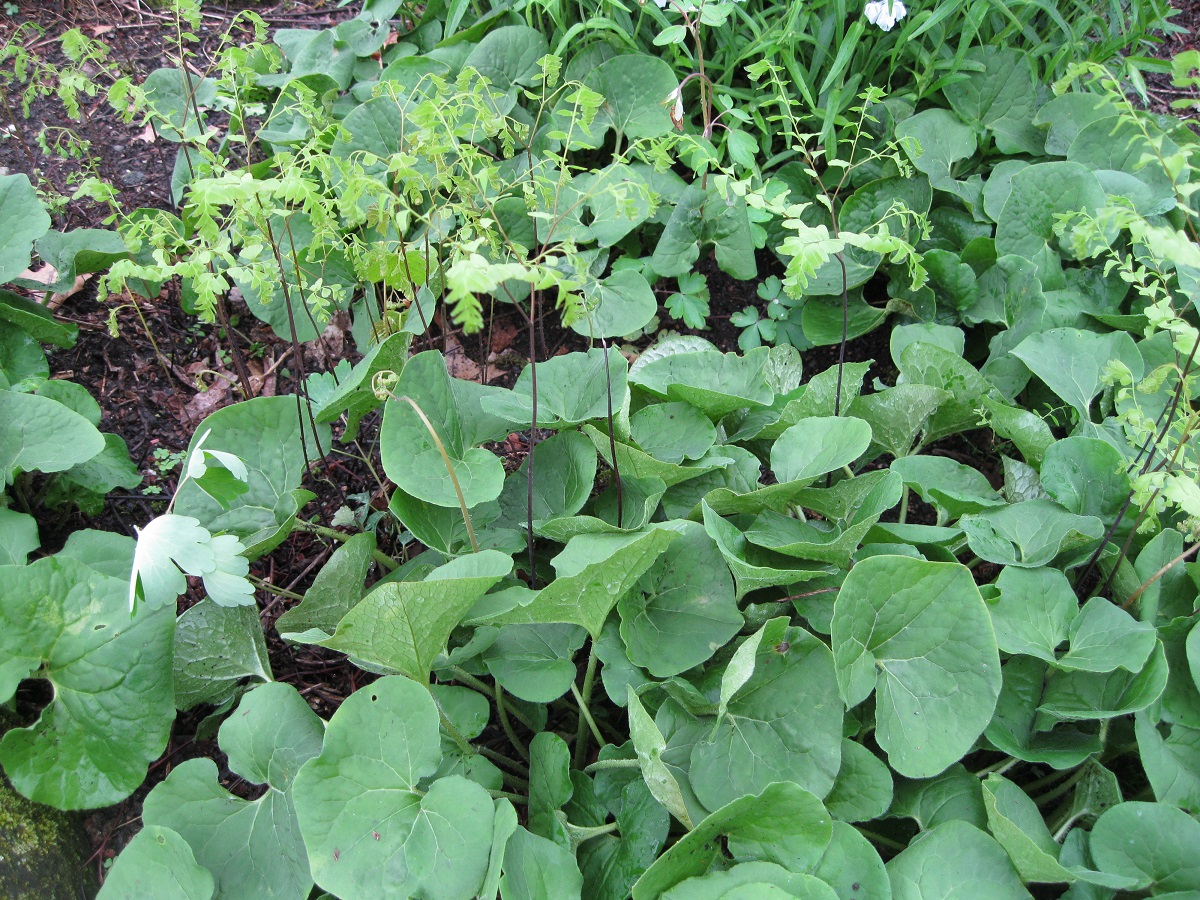
William Cullina suggested planting Wild Ginger and Maidenhair ferns together.  As always, the Ginger has an early start but the ferns will soon catch up.  We find this combination attractive while the underground plant parts occupy different depths.  Soon this display will be stunning.
 

These Shooting Stars were moved here from the shade garden near the house.  The more attractive blue flowered plants are less hardy  and have basically disappeared but these are firmly claiming ground.  Perhaps they prefer more sunlight.


The recent frosts severely hammered these Bleeding Hearts.  The damaged foliage was quickly hidden by new growth with today's rain drawing out the flowers.


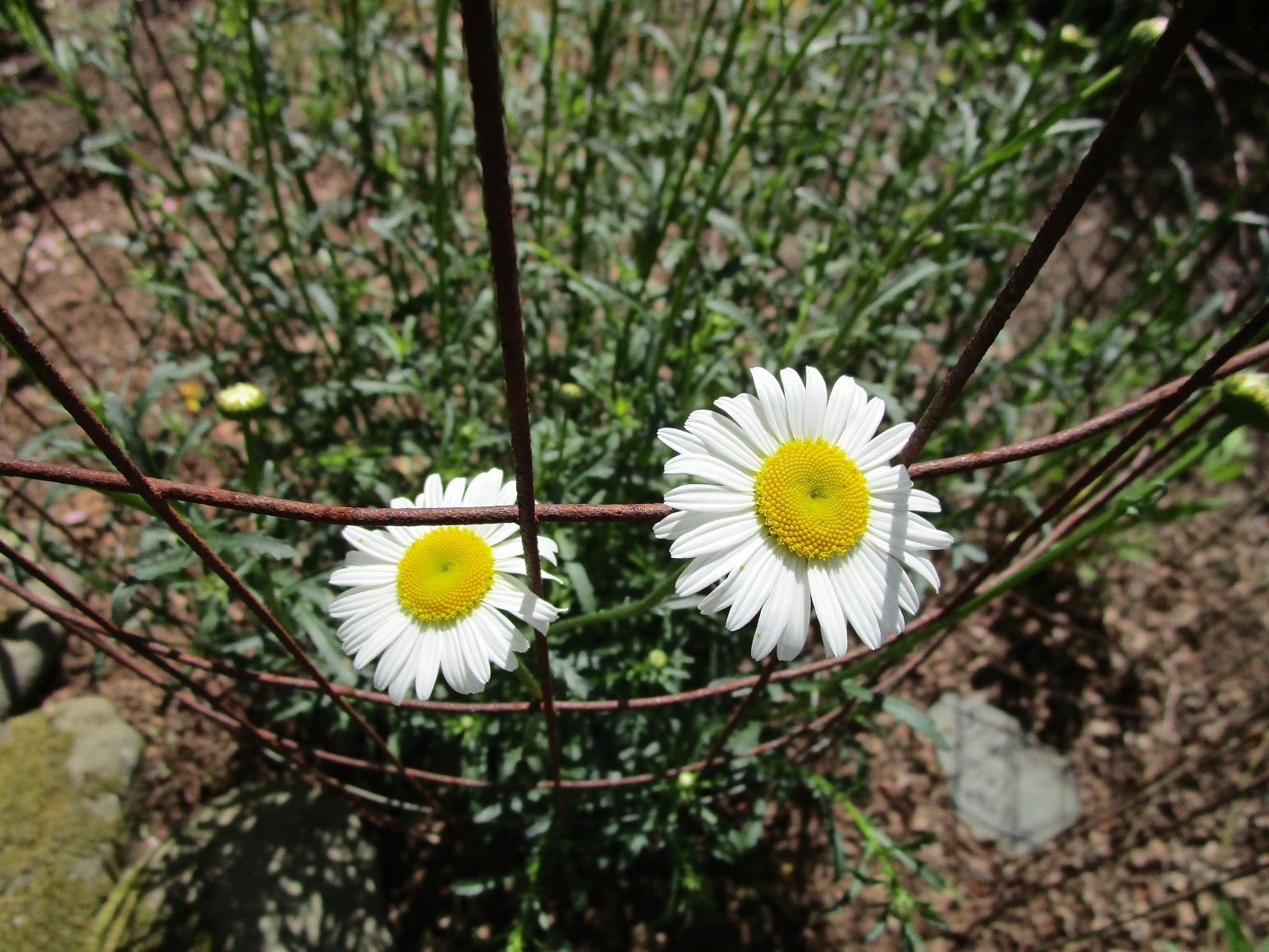
Two years ago, Daisies were moved from the gravel bank lot here.  Flowers were seen but this year there was no sign of these plants here.  These were moved from nearby ground and several days saw water carried here as transplanting them looked like a failure.  Today's heavy rain made all of these plants look alive.  Perhaps Daisies are a biennial and we will have to adjust to them claiming new ground leaving weed filled ground behind.


Cardinal Flower has truly struggled to hold onto life this year.  Repeated warm days were followed by hard frosts.  Yesterday these plants appeared to be dead and we found comfort from the fact that this ground held seed from last year's flowers.  Water was also carried to these plants but it made little obvious difference.  Today's rain seems to have brought them back to life.
 

Thursday, June 10, 2021

Invasive Pests


Rumor has it that at one time in the somewhat distant past, the NYS DEC recommended that Multiflora roses be planted to control erosion.  Unfortunately these plants turned out to be wildly invasive.  They certainly fill a waste space creating an impenetrable barrier.  Their huge numbers point to the fact that they are now here to stay.


Focusing on the flowers, we captured at least two bees.  The upper one has such a generous pollen load that she cannot assume a stinging position.  Several of the flowers have been stripped of pollen revealing black ripening seeds.  As we walked up the driveway, the sweet sweet scent of these roses hit us while we were still some distance from this plant.  These plants are hardy, beautiful and smell great.  It is easy to see why early European settlers carried this seed with them.


What remains of our young Jack-in-pulpits fills the left edge of the photo.  Several bare stems mark the former location of several plants.  Last year our resident deer did not hit here until much later in the summer.  We were unsure if any of the plants would return.  This area would be difficult to cage so no protection was provided.  In the past I have collected urine to use as a deer repellant.  Somehow carrying a sprinkler can down to the road enabling me to spread what is renewable protection seemed in contradiction since the area is filled with a sizeable rock and many other plants.  So our deer made his way between other wire cages and nipped off both leaves and flowers.


This young buck is stabbing the ground clearly stating his ownership of this turf.  We raise our objections to his presence with loud firm teacher control talk or sounds similar to the bark of a big dog.  For the most part he remains unimpressed eventually moving into the cover of the nearby wooded slope.


Two invaders can be seen in this picture.  The two plants growing in cracks in the stones defining the path are sunflowers.  Needless to say we did not plant them.  Some bird did that and these will likely need to be soon moved into more sunlight if they are to grow tall and flower.  Back in the planting bed is a now rather rare ragweed plant.  Becky has been unrelenting in her intense efforts to remove them from our land.  This lacy leafed nasty will very soon disappear.


This is another European immigrant.  It is easy to understand why daisy seeds were intentionally brought from their European homeland to bring a touch of home to this new land.  We have tried, mostly unsuccessfully, to grow large swaths of commercially offered larger plants.  This cluster was pulled from the level ground at the base of our gravel bank to see how it liked the open area near our woodland garden just last year.  It seems to have settled in.  We know that this plant will take and hold considerable ground so we intend to move it nearer to the south edge of this area when a now wild area is cleared.


Becky knows full well the origin of this Wild geranium.  Our first plant came as an uninvited guest hiding under the leaves of a plant purchased at Catskill Native Nursery.  It appeared to be a small attractive plant that could cover the bare ground between our desirable woodland plants.  These tiny flowers have tiny fecund seeds that carpet the area.  Besides that, over time  the original plant revealed its monstrously large root mass and its need to take and hold all of the ground near it.  We weeded out buckets of these plants earlier this year.  Somehow this one still grows here and the flowers will soon be seeding another generation of these attractive but invasive plants.


Monday, May 17, 2021

Finally Underway


When the Trilliums fully open their blossoms, the wild flower season is well on its way.  These transplants have been growing here for a decade or more.  Single plants have expanded now sending up several flowering stalks.  Bare ground does not predominate but plants considered to be weeds are evident.  They were cleared out earlier but as always they must return.  They will be removed again after the Trilliums have completed their growing season's work.


This shade garden within sight of the road is a more recent project.  Most of the moved plants are still alive but few have advanced beyond a single shoot.  Just to the right of the flat stone at the bottom of the picture perhaps one dozen Jack In The Pulpits are pushing up new growth.  We were concerned that our crowd of deer had ended these plants with repeated deep hoof stabbings.  If nothing else, the scattered wire cages have made it difficult for the deer to walk here.  The Woodland Phlox in the upper right corner is densely covered with white blossoms.  A favorite snack of the deer required the placement of a circular wire cage.  A curved swath of recently planted Trilliums fills the center of the photo.


Our point and shoot camera does not accurately capture the color of this Jacob's Ladder flowers.  In the upper left corner find the Twin Leaf plants now encased in a wire cage.  It took far longer then it should have for us to focus in on predation as the cause of this plant's repeated disappearances.  Slowly we catch on.  The wire certainly detracts from the natural look that we strive to create but at least the plants remain alive now.


To most people this might not look like much but we finally have two Painted Trilliums that appear determined to open flowers this year.  The purpose of flowers is to produce seed intended to establish the next generation of plants.  We are wildly pleased with the prospects of open flowers and intend to remain above this land long enough to at least see an increase in the number of these plants growing here.


This Woodland Phlox was seen in the background of an earlier photo but we feel that it deserves no less than a picture of mostly it.  This is a hardy plant despite of its attraction of the deer but we expect to see numerous plants scattered about garden.


This is not the first picture of our Bloodroot.  No flowers were produced this year but there is a fairly large number of new plants growing from old seed.  If the weather cooperates, we should see perhaps three blossoms here next year accompanied by several small second year plants promising future flowers.


This planting of Cardinal Flower has been left largely alone.  Some Chrysanthemum stems were scattered about following snow melt but otherwise these plants have been on their own.  The remaining Wild Geraniums need to be removed.  Their above ground growth appears small and attractive but the underground root mass is huge.


 This is the northern tip of Moss Island.  The white flowered Shooting Stars have settled in nicely but the moss clumps barely cling to life.  These plants simply need more moisture and denser shade.  A heavy rain will turn them green but only for a short period of time.  Still, their determination to remain alive is at least inspiring.

Our digital camera is outdated and showing signs of rigor mortis.  It worked today but I don't know about tomorrow.  Eight pictures is perhaps excessive for a post but who knows when its replacement will actually arrive?