Yesterday was warm enough to work outside as long as the sun was shining. We were so focused on our plants that we did not notice the sun disappearing behind the clouds and hobbled indoors stiff and cold but pleased with what had been accomplished. Jane's Bearded iris are a treasure both because of their source and their color. Royal purple flowers are both beautiful and appropriate reminders of Jane and all that she did for us.
Prairie smoke fills the corner and is doing well as a recent transplant. It likely should be divided but doubt if we will risk damaging it. By early June its tight pink flowers will open widely into foam appearing clusters. It is quite a visual treat.
We have recently been invaded by
iris eating voles. They have nearly completely destroyed our line of Siberian iris planted down near the road. We watched with glee when the resident fox captured and ate voles fairly close to the house. We were fearful that Jane's iris might be in danger and were thrilled with this nearby deposit that may mark the foxes territory and possible protection for the iris. It was placed by the fox at the edge of the stone path and will remain there. We may be viewed as more than a little nuts leaving this where the fox placed it but it may afford some degree of protection for our plants.

We also worked at the top end of the bed initially dealing with last year's October skies growth. This is not a native aster but it does possess certain traits that make it an excellent garden plant. For some reason the deer have not eaten it. Its arching branches form a huge closely spaced half sphere that is covered with purple flowers. New growth is already evident and new plants could easily be dug for transplanting now. Perhaps this year will see the edging stone path finally finished.
This native Sedum is new to us and has grown greatly in its short time with us. It appears to be pleased with its location in the hot sunshine near the house.
Our native Early meadow rue and its mate reside in the shade garden near the road. It exists in both male and female form. We believe that this is the female plant but accurate identification will follow when more growth is evident. Male plants are much smaller and there is a visible difference in the flowers. These plants grow in abundance next to Irma's woods but we honored her memory by buying our two plants. Both have prospered here and new seedlings are abundant. Leaves will follow these early flower buds and another growth year will be underway.

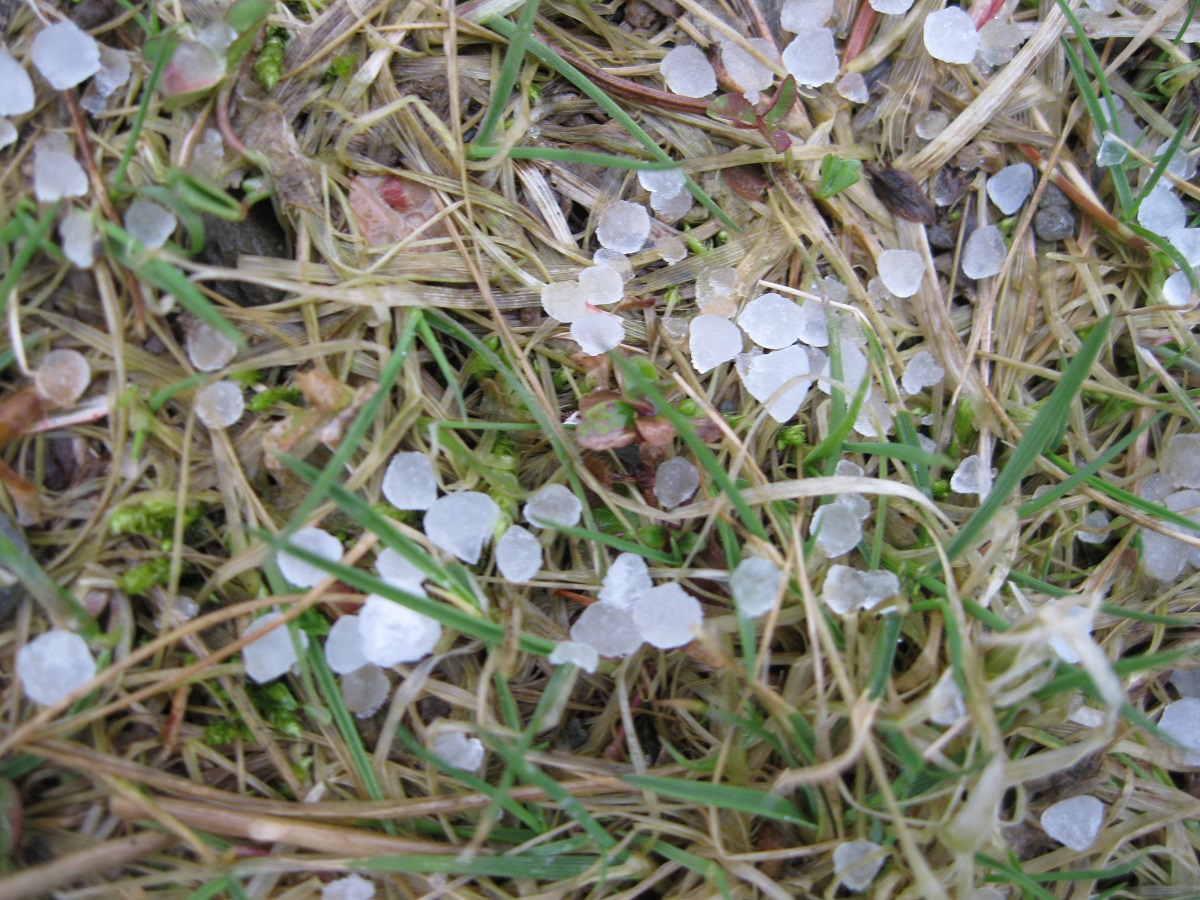
Yesterday's chill kept us inside this morning but bright sunshine lured us outside to make the nearly half mile walk to the mail box. Despite our years outside, we failed to notice the looming black clouds to the west. Totally dry ice pellets began to fall while we were at the base of the hill. Our return walk up the hill took enough time that the early scattered ice pellets increased in number as seen in the photo. It seems that we get older but no wiser but it was an experience to be out in what was a brief but heavy ice storm.