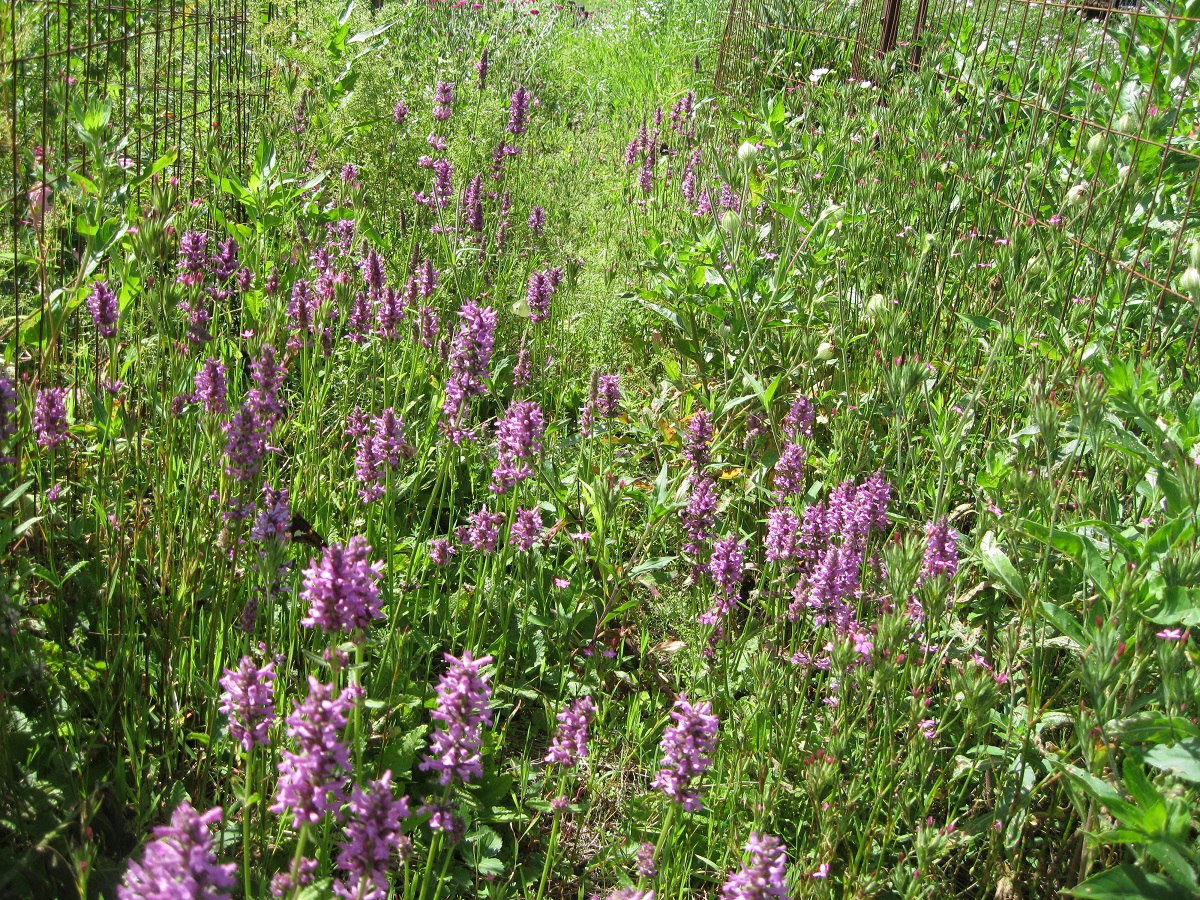
This is our only naturally occurring patch of that wonderful native plant also known as Trailing Arbutus. In the early 1960's the barn burned and the trash that the fire left behind was buried in this area. A gravel bank was opened to expose material used to cover the remains of the barn. This spot features the lumpy overburden that was pushed aside. As difficult as it is to believe, this tiny patch of green may be fifty years old.
When we first found it we knew nothing about it other than it had sweet smelling flowers in April or May. Some years we found and enjoyed these blossoms while other years no trace of the plant could be found. What we eventually learned was that this evergreen plant exposes its sweet tasting leaves following snow melt. Rabbits are particularly fond of feeding on these leaves. Despite this damage, the plant used the next three years to reestablish itself and flower. That explains the wire cage that covers this plant. The dry stone walls surrounding the cage have to date made it impossible for hungry animals to push the cage aside or slide under it.

This area features our first successful transplants and a from seed plant that grew in the soil clump moved with the plant. Arbutus is described as impossible to move in many books but we found success. Our understanding of this plant when we moved it was limited since we were unaware that it exists in both genders. Pure luck gave us three pollen producing plants and one that grows seeds. The dense leaf growth here makes it impossible to know if any other plants grew from the seed produced here. Leaf growth has reached the limits of the covering cage and we have no plans to protect these exposed plant parts.
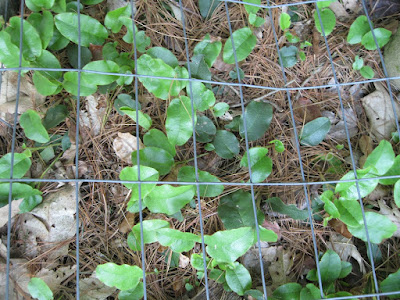
This closeup is intended to show the difference between the new light green leaves that are new growth this year and the older dark green leaves. We still do not understand the life cycle of these evergreen leaves. At some point in time some must die but we seldom see a dead leaf. One may be visible in the second wire rectangle from the left in the center row but we have no way of knowing its age. Their general appearance may be hidden beneath the vigorous new growth.
Our second successful attempt to transplant can be seen here. When these four pollen producing plants and two seed growing plants were placed here, we gave them great care. Fallen White Pine needles were singularly removed so that the Trailing Arbutus leaves were fully exposed. Recently we have limited our intrusion of the natural turn of events since we want this to be a wild native plant. This tree suffered great damage from the late heavy snow storm and the Arbutus plants are nearly covered with fallen pine needles. This cage will be temporarily set aside so that the heavy load of pine needles can be lightened.
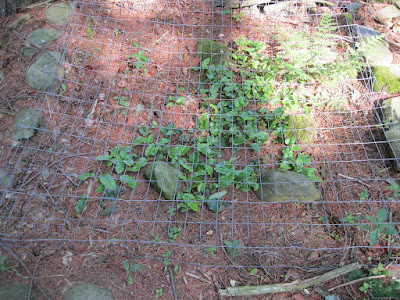
When we were digging transplants, we disturbed a tiny cluster of possibly five plants. These were placed in the corner of our first patch. Two or three years later exactly two plants remained alive. They were placed here adjacent to the property line under a huge White Pine. As luck would have it, both genders are present. We brought no soil here as we wanted these plants growing from a deep deposit of rotted pine needles. They are doing well sending out long pieces of new growth.
Trailing Arbutus plants form their blossom buds ahead of winter. Our next set of pictures will focus on new buds. This year weather was harsh when the open flowers were expected so we eagerly look forward to next year.