Finally we can finally see open Bloodroot flowers. This plant is in our shade garden and we were working there this morning when this flower opened. If that happened in a moment we missed it. A pollinating flying insect was seen close by before the petals spread but we have no idea just how long it took for this flower to open. Its pollen load is massive but it will be short lived. This may be a young plant growing here from seed since none of the larger older plants have put in an appearance this year. Our deer herd spend a great deal of time on this ground last year. A wire cage is now in place but the damage has already been done.

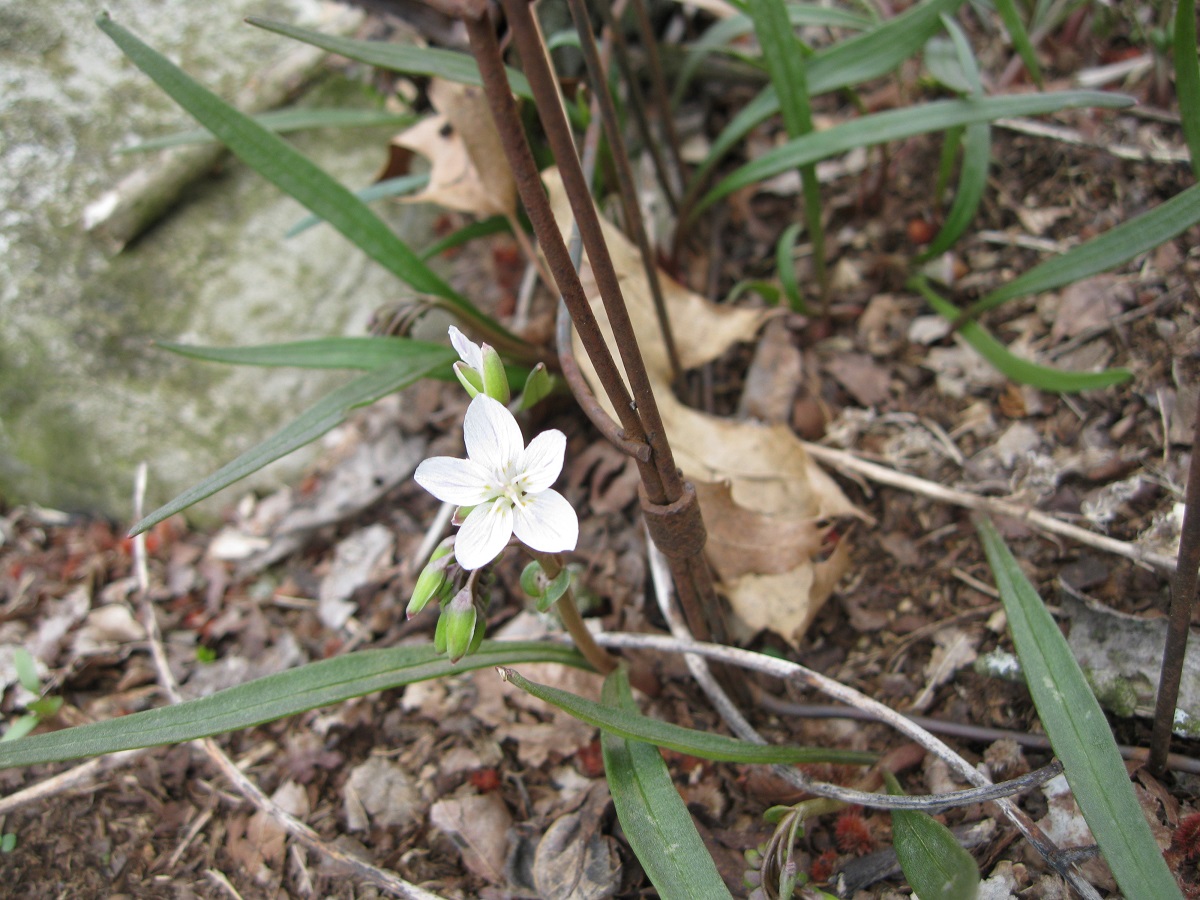
This Spring beauty also opened its first flower here today. It shares a protective wire cage with the Bloodroot. That protection may well be responsible for the increase in size of this plant compared with the tiny plant seen here last year. The corner of the cage can be seen with the plant growing both on he inside and the outside. Removing the cage now will damage the plant so these plants will remain untended until their growing period comes to an end. Weeds will undoubtedly be growing here by then.

Three years ago we planted three Sharp lobed hepatica plants in this area of our shade garden. They are just now making their appearance here. Many times it takes several years for the transplants of a native plant to settle in. We were pleased to find all three plants. Some frost heave had taken place. We chose to bring in new soil rather than resetting the plants. This seemed less invasive than essentially digging them up and replanting them. The fallen tree leaf mulch was reground last Fall. Is it possible for a plant to look happy?

The remainder of today's pictures were taken today at Irma's woods. We have been making daily trips here except for being trapped at home by the recent storm. These plants displayed buds before the storm but some were open yesterday. That these flowers are short lived can be seen by the condition of the flower in the upper right corner of the photo. Despite being in only its second day open, both the pollen and some of the petals are gone. It does not take much of a wind to dislodge these flower parts. Neither ours at home or these plants show any sign of the unfurled leaf that will be soon be seen under the open flower.

These five plants are freshly opened today. That can be said with certainty because we found this quintet days ago and have been making daily visits here. The color of these flowers is pure despite their rather small appearance this year. Last year was hard on these plants and that may be the cause of the smaller than normal amount of visible plant. Larger and taller is how they are usually seen.
These Sharp lobed hepatica plants have been growing here undisturbed for many years. This is without question an impressive display.
Here are today's two stars side by side.