Showing posts with label garlic. Show all posts

Sunday, August 2, 2020

Rescued Ground


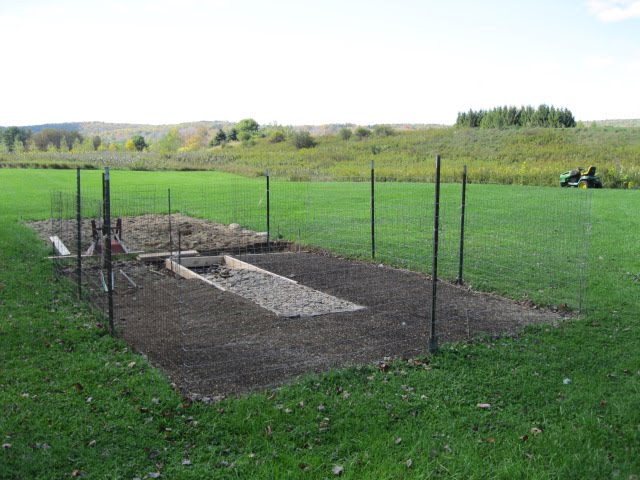
This garden is located near the woods that mark the limit of the glacial deposits that partially fill the river valley . A bedrock ridge supports the existence of trees located on the other side of this depression.  We have four distinct meadows in this area that exist on four different levels.  This ground is the most fertile that we have.  Rather than the usual mix of stones and gravel, this ground consists of clay fines.  The clay presents its own problems while its chief benefit is moisture retention.  We have worked a great deal of compost into this ground resulting in soil that remains porous with enough moisture to support plant growth.

The brown mound in the background was built from weeds removed from this garden.  It is the source of much of the compost that was mixed into this ground.  Only half of this garden is free of weeds.  Once again we tried to do more than we can handle.  Still, time spent here is special.  The roads are far away from here with the only mechanical noise from occasional airplanes breaking the silence.  The sound of the nearby tapping of a Pileated woodpecker cannot be considered as intrusive noise.  It is a natural sound that only adds to the atmosphere of being close to nature.


Our garlic was harvested from part of the area in the foreground.  With the garlic gone, weeds were removed and chopped leaves now cover the bare ground.  We are helping the squash and pumpkins find clear areas in which to grow by carefully moving the vine ends.  Nearby weeds are being removed much slower than the growth rate of these vines and we want to keep the squash away from the weeds and wire fencing.

Presently, we are considering some of this ground as a place where Daylily divisions could be planted.  These huge neglected plants are in desperate need of division and having clear ground ready ahead of time might make that task actually happen.  Garlic will be planted behind the present location of the sunflowers.  These sunflowers are self planted weeds.  Not all weeds are undesirable and more sunflowers will grow someplace here next year.


Our choice for pumpkins is always a variety named Sugar Pie.  Its small size and marvelous sweet taste with smooth texture make great pies.  In a move toward more healthy eating, Becky makes a no crust custard desert.  Portion control forced by the custard cups is another healthy plus.  We have only two pumpkin plants and with any luck more will grow than we can eat with the extras given away.

Waltham Butternut is our squash of choice.  Its longer neck provides more usable product than shorter varieties.  Again only two vines were allowed to grow as the harvest always exceeds our needs.  These squash store on the basement floor for months.  When winter cold makes its presence felt, Becky's baking casserole both warms the house while filling it with comfort smells.

Thursday, July 12, 2018

All In


Growing garlic has been an obsession here for more than two decades.  In our younger days we were able to eat garlic in quantity.  Freshly minced cloves lightly sauteed in olive oil then spread on French Peasant Bread under a generous coating of Parmesan cheese was a favorite way to eat our garlic.  Now that is only a pleasant memory.  There is no rational explanation for why we continue to plant 720 cloves each fall.


A recently departed friend gave us a few of cloves from her garden for this garlic.  We named it Helen's and will always have it growing here.  This year we planted fifty cloves but harvested only forty-one.  Recalling that late winter was bitter here, we were pleased that any of these plants grew following their hard freeze after several warm March days.


When to harvest has always been a troublesome question.  In the book Growing Great Garlic, Ron Engleman advocates harvest when only two or three leaves are still green.  His experience with garlic is limited to the West Coast.  When I followed his advise my garlic cloves were filled with mold.  He also stated that it was impossible to grow garlic in New York State because of our summer weather patterns.  Alabama boomers are common here in July when hot humid days frequently feature severe thunderstorms.  That excessive moisture falling on plants with mostly dead leaves is a guaranteed problem.  Most of my plants still carry many green leaves at harvest.  These green leaves maintain a water tight seal at ground level avoiding the growth of mold.  My bulbs are somewhat smaller but they remain free of disease.


Helen's garlic was the first harvested and has undergone two steps toward cured bulbs.  Elevated on a wire garden cage, the root mass was cut off the day after harvest.  The next day, the lowest solid green leaf is pulled clear removing all traces of garden soil.  Next the stems will be shortened so that the bulbs can hang downward instead of lying on top of the cage.  With that change in orientation much more garlic can cure on this cage.  As the cure nears completion several purple stripes will appear on the outer wrappers growing in the same line as the stalks.

Thursday, June 21, 2018

Garden By The Woods


This long view of our garden by the woods was taken from our highest ground.  Our house would have been built where I am standing to take the picture if money had been limitless.  Two stories on the south side with only one story above ground on the north side was the plan.  The lower level would have been set into the hill with a wall of windows on the exposed side.  That did not happen but working this ground now is as good as it gets.  Remote quiet and distant views make this seemingly wilderness land perfect for the way I want to live.  Pictures show that this is the best tended land on our place.

There is a second ridge behind the one that can be seen.  It is huge and separates the Susquehanna river and Unadilla river watersheds.  The geographic impact on us is the miles of frost rivers that pour down these hills and sweep across our gardens.  I could not have put the garden near the house in a colder spot if that had been my goal.  As it is the cold flow sometimes stays just above this garden when it hits the lower one with full force.

The visible ridge is part of several square wooded miles crossed only by one seasonal road.  We have heard the old timers talk about interactions with bears, wildcats and wolves.  In my younger days I had the land owner's permission to walk his land to the top of the ridge.  Age and a small measure of common sense now keep me closer to home.  On many days it feels like coyotes are close at hand watching me.  So far they have kept their distance.


The original purpose of opening this garden land was to provide ground that had not been contaminated by garlic diseases.  Potatoes are the first crop planted in newly cleared meadow ground.  Next year garlic will be planted where the two rows of potatoes now grow.  Potatoes will then be sown where the pasture grasses now reign.  That area will be cleared of grasses and stones as time allows.  A quick count shows that there will be three more beds where garlic has never before  grown.  If I am still here then, the garlic will of necessity return to ground previously used to grow it.  Considering the elapsed time interval and the near disease free state of our garlic there should be no major problem.


The possible passing of the man that had operated a pick your own strawberry farm prompted me to plant strawberries in larger numbers here.  Previously we had grown only enough plants to supply fresh fruit for our cereal.  Two rows of purchased plants were formed.  New plants from runners were carefully set in four additional rows.  There was to be a one foot wide clear path down the center.  The berries had different ideas and we did it their way.  This year runner plants will be taken to start a new bed.  We hope to see three years of decent harvests from the original planting.  This is a learning experience for us since we know nothing about the proper cultivation of strawberry plants.  We do intend to move new plants into ground that has not previously grown strawberries.


This is the current state of our plants.  Filtered shade created by the nearby trees delayed the active growth of our plants.  Hot dry weather has kept the crop in a holding pattern.  We picked and processed eight quarts of berries from another location.  They were closed for three days to allow their plants time to recover from the ravages of hot dry picking.  We now have about one half of a years supply of jam in the freezer and we are counting on our own fruit to supply the other half.  The going is shaky and slow.  Yesterday's harvest yielded only two more jars of jam.  We clearly have enough berries.  We have little control over the weather and its impact on our crop.  Yesterday I trucked ten gallons of water for these plants.  Hand watering with a sprinkling can took considerable time and effort but likely fell far short of what the plants need.  Rain is in the forecast for the next several days.  My winters supply of jam depends on some real rain.

Saturday, April 22, 2017

Garlic, Strawberries and Onions


For the first time ever, every garlic clove planted resulted in above ground growth.  Three were slow to emerge but they are all up and growing now.  Rot issues still exist in our harvest but the brown spots are smaller than in years past and fewer in number.  It is hard to believe but these plants will be harvested in less than ninety days from now.  We are opening a new planting bed here this year.  Potatoes will be planted there this year with garlic to follow in the fall.  We believe that new ground is regularly needed to avoid bulb rot issues.  That is another reason while the garden continues to expand while we cannot keep up with what is already here.


Our mail person drove up the hill to deliver a package today.  Our onion plants had arrived.  This bed grew potatoes last year and was covered with plastic bags full of fallen leaves over the winter.  After setting the bags aside, a quick stir with the potato hook had this ground ready to plant.  Welded wire fence establishes a grid that allows for quick placement of accurately spaced planting holes.  We used the same spacing that was used to plant the garlic.  Eight inches between the rows and six inches between plants in the row allows ample room for growth with just enough room for a weeding hand.


This photo is misleading.  Becky planted most of the onions while I set the few that were beyond her reach.  The bed in line with the onion bed contains thirty newly placed strawberry plants.  We ordered new strawberry plants last year from a new supplier.  We have done business with Miller's Nursery for decades but the death of one of the brothers caused the surviving brother to close their business.  The new Sparkle plants got off to a rocky start.  In one spot only five plants of the twelve planted grew.  We were not expecting much from the living but they produced a huge quantity of new plants from runners.  The blossoms will be removed from these plants this year to encourage plant growth and the production of more plants from runners.  We intend to train the runners so that two rows of plants similar to what is found at Hellers, where we pick jam berries, result.  Now to find some mulch straw.


I had harvested a pile of horse apples dropped by our neighbor's horses,  When the pile was moved to make way for the onions, this salamander was living in the warmth under the pile.  We do not know where it will spent this night but at least it escaped an inadvertent shovel injury. As near as I can tell it is a Northern red backed salamander.  He breathes through his skin, needs to stay wet and never actually goes in the water.  We have never seen one like this before!

Wednesday, April 12, 2017

Eighty Degrees In The Shade


The past several days have been summer like.  Every house has someone outside happily cleaning up winter's debris.  Perennial plants are appearing everywhere and showing major growth changes each day.  Pleasant as it is to be once again working outside in shirt sleeves, we cannot forget the new growth turned to yellowish mush last year when seasonably cold weather followed early hot days.


Arbutus flowers appear to be only days away.  These plants have been under frequent watch since the buds first formed last fall.  The exposed white tips of the soon to be opened flowers are new.  Despite their location under a white pine tree, afternoon sun strikes these plants daily.  As a result these buds are developing ahead of our other more shaded plantings.  Huge quantities of work cry out for our immediate attention but the arbutus will be checked daily.  We want to see every stage of the development of arbutus flowers.


Our first snake of the season lives in a hole in the wall that separates lane traffic from the arbutus.  Becky spotted it without the ear piercing scream that usually greets the first snake.


Our garlic bed is a regular stop on our tour of the back meadow.  270 cloves were fall planted in this bed.  Leaves made small by an encounter with the lawn mower were placed over the planted garlic.  Soil temperature moderation, weed suppression and water retention were the goals of the leaf cover.  Still some of the emerging garlic leaf blades were trapped by the bigger pieces of mulch.  A helping hand set them free.  Very little work will be required here as this crop moves toward harvest.  Mulch will suppress weed growth giving the garlic a tremendous head start.


Here we see a piece of a Royal Jelly Siberian Iris removed from its former home.  The Smith & Hawkins spade purchased in Manhattan and transported to a Brooklyn apartment before being delivered here by daughter Amy is only used to divide plants.  We wish to avoid a broken tine that might result from contact with stones in the wilder sections of the garden.


The harvested iris was taken from the gap between the wall and the large clump.  It will not be missed as the older plant still holds a large spot in the planting.  Despite their being a common garden plant, the crocus are making a rare appearance here.  Browsing deer usually bite off the early green leaves before the cages are placed.  This year we won that race.

Wednesday, March 8, 2017

A Cool March Day In The Garden

 Early March is the time when we look longingly out the window wondering if we can venture out to play in the garden.  It was cool this morning but the sun was so bright and the sky so blue that we threw caution to the wind and headed outside. Where  should we begin?  We wanted to stick together and so we decided to start in the garden down by the road.  Since the garden tractors are still equipped for snow, Ed loaded our garden carts and tools into the back of  his Red Ranger.  We started in front of the stone wall and the vibrations from our activity  tickled a big night-crawler to the surface.  Too bad the  flock of robins that Ed saw yesterday were gone.  They missed a feast.  I should have taken his picture, but my hands were cold and I decided not to take off my gloves to use the camera.  Finding the soil next to the wall still frozen, we moved to the Siberian iris that were in the sun.


All of the Siberian iris were need of a trim.  Who know what might be under all of those leaves?


The plant that I was working on had red bee balm growing all around it.  I knew it was there before I could see it because when it was disturbed  it gave  off its amazing scent.  I love my fragrant plants!


We had fun and seeing the bed looking neater made us both felt great, but our hands were getting very cold.  I thought we might be heading back to the house, but once inside the truck where it was warm  we decided to drive to Ed's garden in the back to check on his garlic.


Ed was not at all sure if he should be happy to see his garlic up now.  He mulched it with leaves to keep it from coming up too soon.  In the end the plants decide when the time is right.  I was glad to see it!  It was definitely time to head back to the house for lunch.  Hot soup and a grilled sandwich seemed like heaven to two chilled gardeners.  We were really glad to be inside when the wind started wailing and rain or sleet pelted the windows.  The lights blinked three different times, but the power stayed on.  Still cold the two of us cuddled together for a little afternoon nap.


When we awoke it was nice out again but cooler.  Ed went back out anyway and  trimmed this garden bed.  I was thrilled to see my Dutch iris coming up.  The cage will keep the deer from nipping them in the bud!  Gull's Wing Siberian Iris hold the left near corner.  Three small plants were mail ordered several years ago.  The tiny plant had been given up for dead but it made an appearance last year.


It was good to see this quack grass go from among the crocus.  Ed is a master at teasing these nasty invaders out of his garden soil.  A cage was put in place over the crocus.  This year the deer will not get to eat them before they bloom.
 

Monday, March 14, 2016

Season's First Ticks


There was an afternoon break in today's cold rain and a perimeter walk was in order.  The lane provides a clear path and views of the changes that are happening daily.  The red maple buds are showing red color and are swollen.  Soon the trees will be covered with beautiful open flowers.  They are small in size but their masses are impressive to see.  Our neighbor was not pleased with the state of the buds.  Their condition marks the end of his sap season.  For the second consecutive year, unusual weather negatively impacted syrup production.  Nights with below freezing temperatures followed by warm days move the sap up the trees and into collection buckets.  That has not been our local conditions.  Days of below freezing temperatures produce no sap.  Nights of above freezing temperatures produce no sap.  By today all of his collecting buckets have been removed.  There is no market for syrup made from bitter cloudy sap.

Garlic planted near the back woods is up and looking good.  My shredded leaf mulch is a little thin and will have no impact on controlling weed growth.  Now that I have discovered that my hand mower has a collecting bag, I can easily make shredded leaves by the bucket.  Next year my garlic will push up through a proper layer of leaf mulch.

When I came indoors after my walk, two deer ticks were discovered walking on my ungloved hands.  This marks the beginning of the full body check season at the close of every day spent outside.  Lyme disease is nothing to treat lightly.  A former student was forced into disability retirement in his mid thirties by this disease.  Our college librarian daughter worked with a student recently blinded by this disease.  We continue to enjoy our time spent outside but undergo full body inspections daily.  Ticks have been found attached to the most personal body parts possible.  We did not include any tick photos with this post.  You're welcome.


We drove to the top of the ridge for this picture.  For the past several years a pair of geese have used this spot to raise their family.  A sizable man made pond can be seen at the top of the photo but the geese nest amid the brush and trees.  We have no way of knowing if this pair is the same pair that nested here in the past.  We do know that these two have been on this water for the past several weeks.  Once they were seen floating in a small patch of open water that was surrounded by ice.  Soon only one goose will be easily seen as the other will be sitting on their clutch of eggs.

This is the season for an important period of March madness that is more useful than basketball.  Breeding time is here for the wild animals.  While I was walking the lane, two gray squirrels came charging in my direction.  One was close behind the other and neither noticed me standing in the center of the lane.  At the last possible moment one veered left up a tree while the other went right into the bushes.  It is highly likely that after I had passed, they found one another and finished their business.  Moments later two birds flying beak to tail passed very close to my head.  The turn to avoid me was just a brief moment in their aerial dance.  Spring might be officially a week away, but things are definitely heating up here!

Monday, June 15, 2015

Cutting Scapes


Garlic harvest should begin in one month from now.  Each year I try to delay digging in the hope that my crop will feature impressively huge bulbs and cloves.  Dying leaves relax their tight grip on the stem and rain water finds its way down inside the bulb wrappers.  This year the plan is to begin digging early.  In spite of the bizarre weather this year, the garlic now looks extremely good.  Putting large size aside, we are going for a disease free harvest.  A scape can be found amidst the tangle.  It is pointing toward the ground.


Not all growers believe that removing garlic scapes increases the size of the bulbs.  With the second method of reproduction gone, all of the plant's energy is directed to the bulb.  If left in place these leafless stalks will produce an incomplete flower and a cluster of tiny bulbils.  The advantage in planting them is that they carry no soil borne disease.  Their disadvantage is the number of years required to grow full sized bulbs.  Garlic scapes appear in farmer's markets as a food fit for humans.  They might pickle like green beans but we gave up canning years ago.  As a stir fry ingredient they would add zip but we now eat very little rice.  So in the compost they go.  Their scent will be unmistakable a year from now when the mature compost is screened.


Purple stripe is the name of this variety.  We use it as a marker plant to separate our other plantings of varieties that display only similar to each other appearances.  Purple stripe is shorter than the rest with a thicker stem.  Its leaves are broad and closely spaced.  A bluish cast in the leaves makes purple stripe stand out from the rest.  Harvested bulbs display beautiful colors making this a real winner.


White Bishop is the name we assigned to this variety.  Purchased from a local grower named Bishop, his name had to be matched with this variety.  Anyone that has attended the Saugerties Garlic Festival must have seen Mr. Bishop.  Most growers there displayed their crop from the back of a pickup truck. Charlie worked the crowd with a never ending carnival barker's banter.  He sold a great deal of his fine garlic and everyone knew that he was there.  I suspect that the actual name of this variety is Extra Hardy German White but definitely prefer to call it White Bishop.

Sunday, April 26, 2015

No Scent Yet


It is not likely that more closely watched wild arbutus plants exist anywhere.  Six days each week two trips are made down the hill to the mail box.  Arbutus plants are given a visual inspection on every return trip.  Frequently the protective wire cage is set aside so that fallen tree leaves can be removed from arbutus leaves.  This year's heavy snow load really flattened these evergreen plants.  I must confess to a certain amount of fluffing to expose hidden bud clusters.  Finally today, buds are beginning to open.  Their sweet fragrance is still a day or two away.  The sight of open flowers was a super spirit booster.

 
All of the flowers here from previous years have been white.  This plant was transplanted last year and the bud tips have shown pink for the past few days.  It is a female plant as shown by the seed clusters it produced last year.  We will watch to see if any of the other female plants display pink flowers.


We feel extra pressure to keep this bed adjacent to the road in good shape since it is on prominent display.  Most cars whip by at a high rate of speed so all that is seen is just a blur of colors.  Grass clippings did cover the undeveloped section in the distance but the quack grass made a return.  We will try to extend the garden by at least six feet this year.  The distant brown mound holds all of the plant clippings and weeds removed from the garden last year.  We were surprised by the volume of material taken from the garden.


The garlic planting looks promising.  Only five of the two hundred seventy bulbs planted have yet to make an appearance.  Daphne's method of treatment before planting has made a big difference on the health of our plants.  Last year we tried dried grass clippings as a mulch at planting time.  A winter's snow packed the trimmings into a difficult to penetrate mat.  This planting was covered with a thin layer of ground leaves.  Garlic tips had no trouble pushing their way past the leaf mulch.  We will watch to see if any problems follow this mulch.

Tuesday, January 24, 2012

Gone Again


Once again warm, for January, rain has dissolved our thin snow cover.  Daytime temperatures climbed into the 40s F today and I walked to the back to check on my garlic.  Only two plants have pushed new growth above the still frozen ground but we really need some lasting snow cover.  The amount of stone on the surface surprised me.  There was no time to sift out the stones last fall but I picked and raked stone for hours before planting the garlic.  Only the big stones are gone.  Small broken pieces litter the ground.  Each stone is a reservoir of moisture that will aid the growing plants this summer but any garlic directly under a stone will have to work to reach the surface.


A recent solar flare may create northern lights visible in our part of New York State tonight.  In our three score plus years we remember seeing northern lights on three different occasions.  One of those sightings happened while we were living here in the country.  There are no electric lights near us so our night sky is really dark.  Any cloudless night features a sky filled with stars and planets.  Stars are so numerous that it is difficult to find the constellations.  Add northern lights to our already impressive celestial display and the experience is unforgettable.  We were ready to be dazzled again tonight but as is so often the case all we will see is cloud bottoms.  Still the optimist in us will send us to the windows to look for a hole in the cloud cover.  There is always a chance that the sky will clear.

Through the evening   we looked to the north hoping to see something. There was kind of an unusual pink glow to the thick cloud cover, but I think perhaps it was wishful thinking on our part.

Thursday, March 31, 2011

Walking the Paths

Snow is finally leaving the wilderness garden and our garlic is beginning to peek out. Storm warnings have been posted for tonight so these plants could be under eight inches of new snow tomorrow. Our walk revealed several of these piles of dirt. Their source is a mystery. No machines have crossed this path since the first November snowfall. No depression is under the disturbed dirt. No disturbed sod can be found near the mysterious dirt pile. Not for the first time in my life I am completely clueless about what I am seeing. How did these dirt piles come to be here? We found something green and growing near the path. Princess pine is fairly common in these parts but finding something off to a fresh start this time of year is exciting.

Gray and growing is also exciting. Reindeer moss is very common here. When the weather is dry the plant becomes very brittle and is described as flammable. Any contact breaks branches and they do not recover. Rain softens the plant and the contrast between these two states is quite amazing.

Saturday, March 19, 2011

Slowly Going Snow

The calender says that spring is here so I hiked to the back to check on the wilderness garden. It appears that this planting area is sited where the north wind piles massive snow drifts. Late snow melt could be used to delay the emergence of frost tender plants. Now that the natural order is understood, this disappointment can be turned to an advantage. For now I will recheck closer to April to see how the garlic planted here is growing.

Low winter sun combined with shadows from the pine covered ridge keep this area cold. Walking from the brown grass onto the snow pack is like stepping into a giant walk in cooler. Even when the snow is gone the temperature difference remains. Brown rivers amid the snow mark the path of the melt water. Springs keep this area wet year round and the action of frost here is unique. Vertical columns of ice crystals raise the soil several inches above its normal level. Walking here now can drop your boot well into the muddy mess as the surface crust softens.


Gravel is near the surface under the pond. Water flow from many springs keeps the pond full during summer. Winter stops spring flow here and the ice slowly depresses as the water drains from under it. Snow melt and spring flow have filled the pond and soon we will see salamanders and polliwogs. Plans call for another attempt to replace some of the goldenrod with other native plants. Ground nuts, blue flag and cardinal flower will be placed on the dike. Iris insata, not even close as a native plant, is also moving here. Personal preference trumps principled planting here.

Saturday, October 9, 2010

Garlic Ready


New ground has been made ready for planting garlic. A mid October planting date here usually allows for six weeks of root growth before the ground freezes. This U shaped bed comes with a problem. I can reach to the middle of the five foot wide beds. Across the corner is more than five feet. We do not walk on the planting beds so a piece of board will provide a kneeling place to plant from. Once planted, weeds here will be out of reach. Stone paths provide a dump for the all too common stones the glacier left in our soil. An active compost trench will replace the field grass next to the bed.

Removing the sod was the first step in preparing this garden. We may avoid that step if the grass clippings kill the grass in next year's new bed. Raking out the larger stones allowed us to grow potatoes and squash here this year. Sifting out the smaller stones will allow finer crops to be tended. Trying to pull weeds with the stones in the ground is an unpleasant chore. Pulling weeds from the sifted soil is a breeze.


Disease made developing this new ground necessary. This year we harvested perhaps one hundred pathetic garlic bulbs from the seven hundred twenty planted. Pink root, Pyenochaeta terrestris, plagues onions and garlic in the garden near the house. A three year crop rotation has failed to remove this pest. Both the soil and our compost are infected. New seed stock has been found. No garden compost was added to the new planting beds. More than the usual anticipation surrounds this year's garlic planting.

Deer can easily jump over a four foot high fence. The small area inside the fence does not provide enough space for the deer to land the jump. A circular running start would be required to jump out. So far the fence system has prevented any deer from entering the area. I gain access by untying twine that secures fence to posts. Laying sections of fence aside opens the entire area to me. Nest building birds do take fiber from the twine but to date none have opened a gate.

Thursday, May 13, 2010

Who Stays And Who Goes?


These tulips have been in the garden for more than 15 years. I bought them in Buffalo when Amy was in college, and I'm a little sentimental about them. The leaves look good, but I think I see a little brown on the flower. I've already begun digging up fire infected tulips, and disposing of them in the trash. I wonder if these old friends will have to go?


Ed's garlic needs tending. Even though he planted buckwheat here last summer my pink poppies are coming up like crazy. Although we did not plant a poppy cover crop, this looks like one. Wind blown poppy seed overcame our defenses. Usually the garlic beds are nearly weedless. That is not the case this year.


Growing great garlic in upstate New York faces weather challenges. Early summer thunder storms bring heavy rain when the garlic should be drying down. Last summer brought rain nearly every day. Bulbs had visible water inside the wrappers at harvest. Despite our best efforts only one half of the planted bulbs have produced plants. None of our eighteen varieties failed completely but three have produced few plants. Harvest is nearly sixty days away. We hope for rain and warmth now and a mostly clear July.

I had a very fleeting sighting of a male Indigo bunting today. What an iridescent blue he is. His mate must be all a twitter. I know he does it for me!