Thursday, July 7, 2022

Flowers In The Wild


When this rather poor farmland became ours twenty-eight years ago, we were in our fifth decade of existence and capable of hours of physical labor in intense sunlight.  Sod was removed and stacked to compost.  Stones were sifted from the soil and used to build weed free paths.  Tired but happy was the rule of each day.  Our present loss of function has totally changed our garden.  This Butterfly Weed plant may have planted itself here.  We remember trying to establish purchased plants with mixed results.  This plant may well be self planted from seed.  It is at the end of a planting bed in full view from the living room window.  Many recent days find us watching this Aphrodite Fritillary butterfly from the comfort of an airconditioned room.  As I was being driven inside by the oppressive heat, I  stopped for this photo.


Rose Campion is a beautiful but difficult plant.  Its brightly colored flowers are backed by a silver green colored foliage.  It is a biennial with a low rosette of leaves as its first year of growth.  A long tap root makes transplantation difficult.  We have been content to let these plants grow where they please.  In time small sifted stone paths become filled with composted plant parts and minerals from the stones.  Many plants seem to prefer this mixture as a place to grow.  We happily walk around these beauties to use our garden paths.


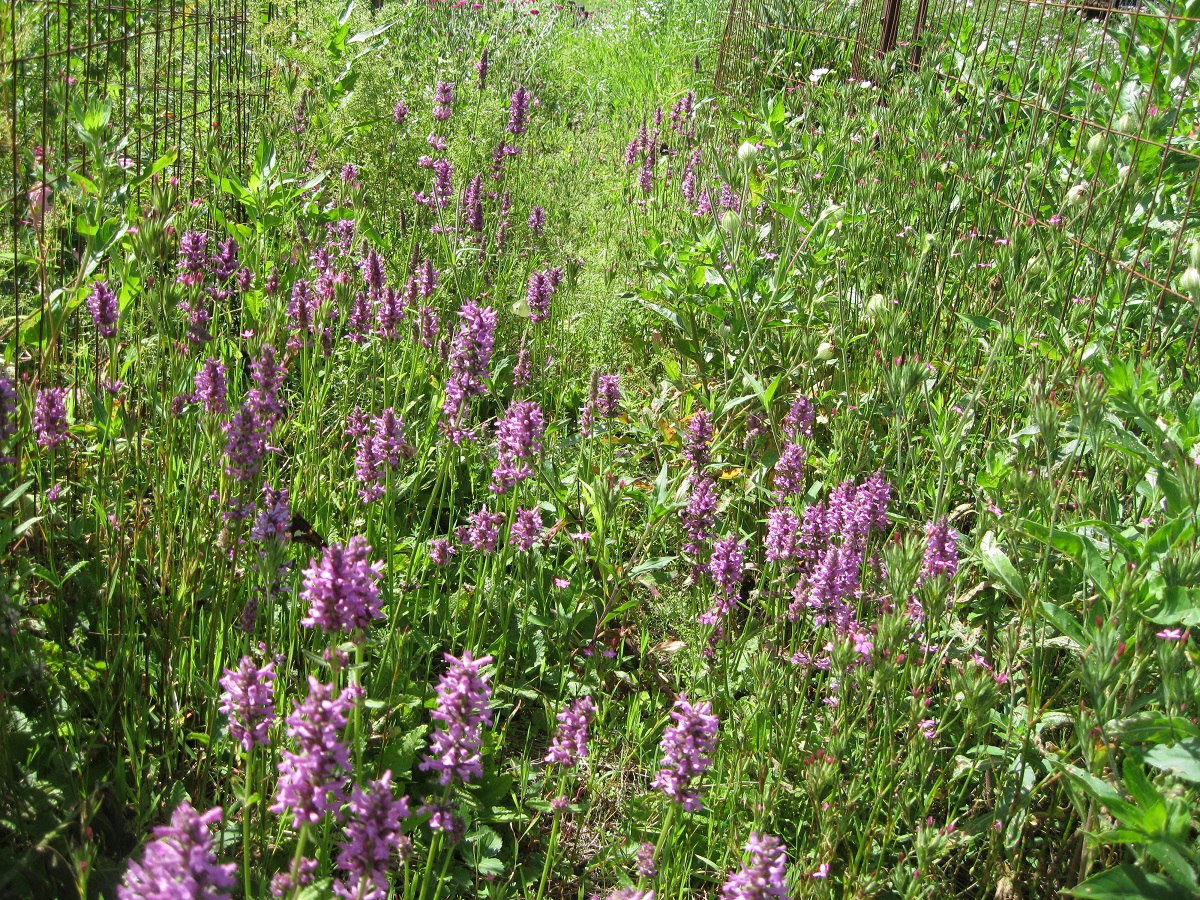
This view is looking straight down a thirty by three foot stone path.  No stones are visible despite their six inch depth.  Wood Betony is another purple color flowered plant that has been popular here for decades.  Planted in our carefully prepared soil, the plants grew but did not flourish.  These plants are all escapees from our stone free planting beds.  They find something in the path ground that was missing from the soil that we created.  We intend to clear out some of the weeds while doing no damage to these special plants in preparation for next year's display.


Elle gave us these Gloriosa Daisies years ago.  As she said would happen, many plants returned to yellow only petals while some of the brightly colored flowers persist.  We are moving along in age ourselves with no plan for what comes next and find some comfort from these past gifts.  Many different plants in our gardens came from Elle  They always bring to the front pleasant memories. 
 

Wednesday, June 29, 2022

Milkweed Flowers


June drawing to a close has always been a special time of year.  Thirty-four times it marked the change from working in the classroom to ten weeks of vacation or a summer job.  For many, Milkweed is little more than a roadside weed.  Its unique connection to the Monarch butterfly makes it an incredibly important native plant.  Our retirement land was purchased more than one quarter of a century ago and its wildly rural nature placed us in close contact with both the butterfly and its food source.  Memory of its powerful scent could not go unnoticed.


The difference in the color of the open flowers remains an unanswered question.  Many are close to white colored while others show a rose pink.  One possible explanation could be the age of the open flower but we see both colors on plants with both open flowers and unopened buds.  Perhaps this issue is similar to the variation in human eye or hair color.  It just happens.


Several years ago we started squash seeds indoors well ahead of the last frost date.  When these plants were moved outside there was a long period when no blossoms were pollinated.  The newly opened flowers on the milkweed were a powerful magnet drawing in all of the bees.  Our squash simply had to wait until these flowers were finished.  Early yesterday morning when I first saw open flowers, a perfect Fritillary butterfly was finding food there.  When I returned in the afternoon with a camera the bees had taken possession of these flowers.  The only butterflies seen then were being chased away by selfish bees.


It comes as no surprise to those people that know us that we meddle in the natural order.  As Fall approaches we see huge numbers of Milkweed plants with no leaves as they die down.  This is at the exact time when the caterpillars need a food source.  These developing creatures eat only Milkweed leaves and they are scarce at that time.  Milkweed is an amazing plant.  When it has a visit from a lawn mower, it simply regrows.  We mow two large fields intending to end mowing in July so that the new growth will have young leaves for the caterpillars.  This sounds like a good plan but some of the plants that we cut down are feeding new caterpillars.  We do have large areas that never see the mower so we are not killing all of them.  This working with nature is never easy.