Showing posts with label garlic bed. Show all posts

Sunday, October 9, 2022

Garlic Bed


More than a month has passed since our last blog entry.  Most of our gardens have been captured by weeds requiring a great amount of work to find the ground.  Overnight frost followed by clear skies created an environment conducive to outdoor work today and we spent two hours working outside.  When Becky returned to the house with her garden cart in tow, two snakes were soaking up the sunshine in the curved stone lined path to the basement door.  The one at ground level quickly disappeared into the stone wall while this more mature snake remained motionless higher up on the wall.  Becky was able to scoot by and get her camera without moving this snake.  We gladly share our homesite with them since they eat varmints that feast on our garden plants.


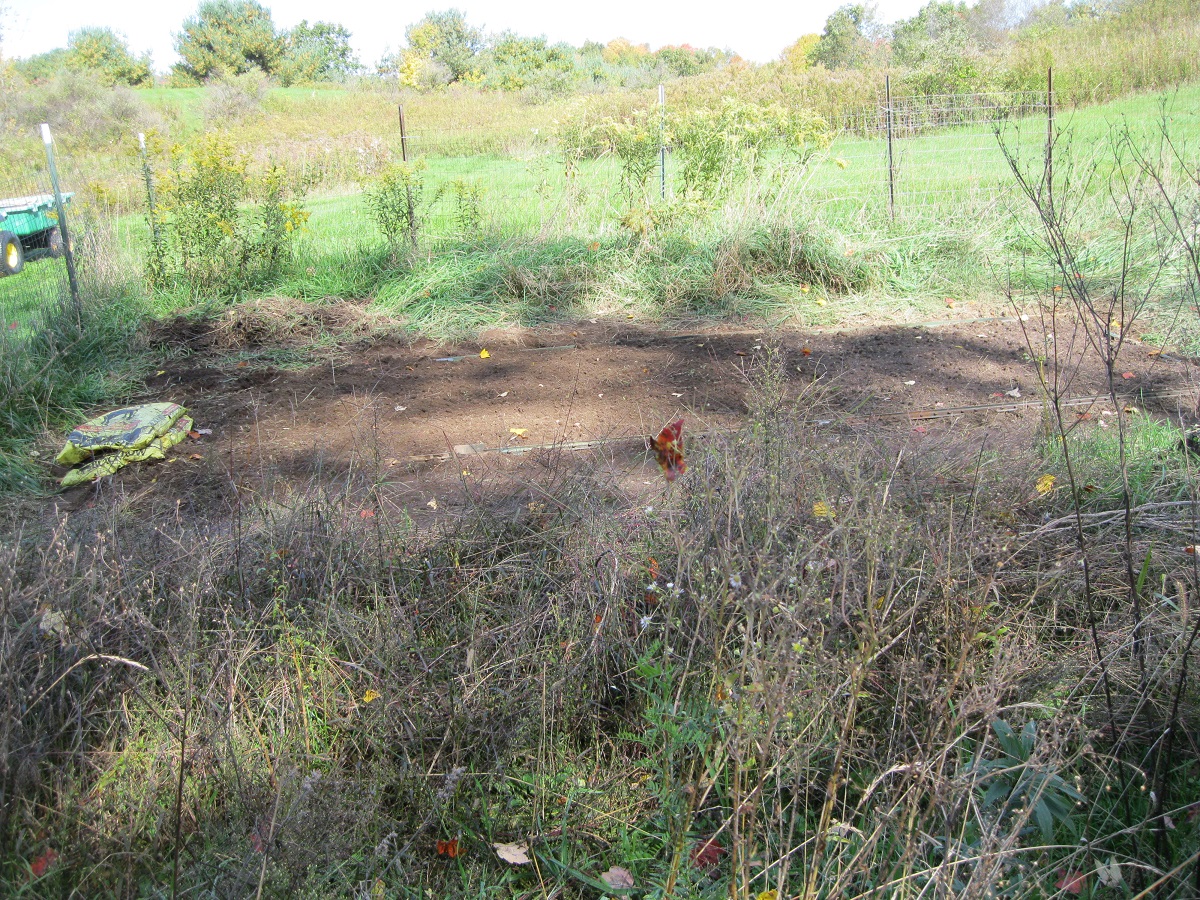
In the center of this sea of weeds lies a painstakingly prepared bed of rich garden soil.  Removing the entire weed has been our goal.  Considerable time and effort has been expended clearing weeds from this sixty square foot  section of a planting bed.  Working only with hand tools has required many days to get to this point.  I use a four tined spade to loosen small clumps of weeds.  Then a hand held cultivator is inserted to pull free small clumps of weeds and their roots.  The surface of the bed looks great but we know that persistent evil lurks just under the soil surface.


Quack grass is the most evil weed weed here.  This entire plant mass remained buried in soil that I had painstakenly cleared.  Only the small green shoots hinted that not all of the plant had been removed.  Working carefully in the loosened soil, this monster was removed in tact.  Experience has taught us that despite our application of careful persistence, more of these missed weed pieces will grow alongside of our soon to be planted garlic.


One of the issues that makes gardening difficult is the down side of growing older.  In my wilder younger days much time was spent building dry stone walls.  That could be the cause of the arthritis that has settled in my spine right at belt level.  This morning's use of a long handled potato hook  on already loosened soil set that section of my spine ablaze.  Using the cold grass from last night's frost and removing the need for my spine to support my upper body sent the pain packing.  Becky did not return to find me on the ground.  After she returned I told her that a ground bed might help.  It did but when the pain disappeared, she spoke in favor of the end of today's outside work.  We will try again tomorrow.
 

Friday, May 12, 2017

Lessons Learned


Very early on in our quest to garden here, we learned just how vicious the pasture grasses are in reclaiming what had been theirs.  Quack grass is unbelievably invasive.  Any tiny piece of root will grow into a determined plant.  Sometimes I feel like the plant can regrow if only its scent remains in the soil.  The battle to keep it out of the garden is constant.

When we first opened this garden by the woods, a trench system was established as a barrier between the garden and the grass.  We used landscape fabric to cover the bottom soil.  Quack grass quickly grew both under and into the fabric.  Its web of roots was impossible to remove so  it was start over time.


When the fabric is removed the roots above and below it are removed as well.  Major effort is required to pull plant growth free on both sides of the fabric.  Once that is done the remaining soil is remarkably free of plant parts.  Some soil is removed next.  Cardboard is placed at the bottom of the shallow trench.  We believe that the cardboard discourages grass growth.  Weeding the bark mulch is straightforward and simple.  Once finished we expect that this area will require little of our time for the next several years.

The strawberry bed requires some explanation.  New runner plants were moved here earlier this year.  We intend to let these plants run and fill in the straw covered area.  The area covered by leaves will be kept free of strawberry plants.  If all goes as planned we should enjoy a plentiful harvest for three years.  We intend to pinch off all blossoms this year to focus the plants on growth.


We remain totally free of income from our blog.  Any product endorsements are given only because we find the product great.  The Cobra Head cultivator is just such a product.  It has been available with a short handle for several years.  We use them extensively while seated on our garden carts.  They fit the hand with ease and are fantastic for hand cultivation.  A long handled version has recently come to our garden.  It just arrived and a test run was in order.  In the past a four tined stone fork was our tool of choice for standing work.  The single tine of the Cobra Head pulls through the ground with almost no effort.  The tine is on its side in the photo as piece of quack grass root is slated for removal.  In all fairness, this ground had been worked with the stone fork earlier this year.  The hand held model can deliver impressive force to large deeply rooted weeds but it is easier on the weeder to use a spading fork to remove the monsters.  We will treat the long handled version similarly.  Knockoffs are  now appearing on the market so you know that this is a quality product.

Sunday, September 25, 2016

Just A Light Kiss


Last evening had all of the indicators for an overnight frost.  After sunset the temperature plummeted and the clear darkened skies were filled with stars.  All of the tender plants that we intend to save were in pots in the basement.  We awoke this morning to find the air densely filled with fog.  River valley fog drops copious quantities of liquid moisture on every exposed surface.  If any frost had developed it was soon washed away.   An early walk through the garden near the house revealed no frost damage.  Basil leaves were free of black slime.  We have some doubt about the moon flower buds but rarely do they open here.


The garden by the woods told a slightly different story.  Only a few squash and pumpkin leaves were blackened by frost.  This garden is at a higher elevation and at a greater distance from the river.  River valley fog is less dense here and the damaged leaves were close to the ground.  Where the vines had climbed the fence all of the leaves escaped damage.  Only a few of the leaves closer to the ground were blackened by frost.  How one leaf dies while those nearby escape damage remains a mystery.

River valley fog is both a curse and a blessing.  Most September nights here had fog form.  Wet foliage is prone to develop powdery mildew and the low sun allows moisture to remain on some leaves into the afternoon..  The leaf in to picture shows only mildew spots but many nearby are totally spotted and dead.  These leaves had died at the hands of the fog while last night the fog saved nearly everything from frost.  With any luck we may see several frost free nights here.  Pesto season lives on.


The garlic bed is ready to plant.  This area supported only growth from missed potatoes this year.  Corn was scheduled to be planted here but the dryness of May told us not to bother.  We did weed the potatoes and harvested a respectable crop.  A measure of compost was raked in several weeks ago and the ground was allowed to rest nearly free of weeds.  Today well aged compost from the lower garden was mixed with Miracle-Gro potting soil.  We have never used potting soil in planting beds but our dear friend Helen does.  Her gift of garlic performed better here than anything else we planted.  Sixty planted cloves produced sixty healthy plants.  Not willing to argue with success and wanting to use her idea here, we parted with the big bucks.  The first layer of the compost mix was turned into the soil.  The second layer was left undisturbed at the surface.  When the cloves are planted in mid October we hope to find the soil lose enough to plant without another session with the potato hook.  It we need to do that it will bring new weed seeds to the surface.  When the garlic cloves are returned to the soil, we feel that next year's garden is actually underway.