This is a time of year when the pull of our gardens is strong. A seemingly endless groups of tasks calls out for our attention. This is work that we really enjoyed doing. My retirement life plan was centered on our future gardens. Age has made it painful to complete tasks that focus on the ground and its weeds. Daily trips to Irma's woods have become our habit. As a result we get to see the growth habits of these native plants as they begin their all too short life above the rotting leaves while we walk on the edge of a dirt road.
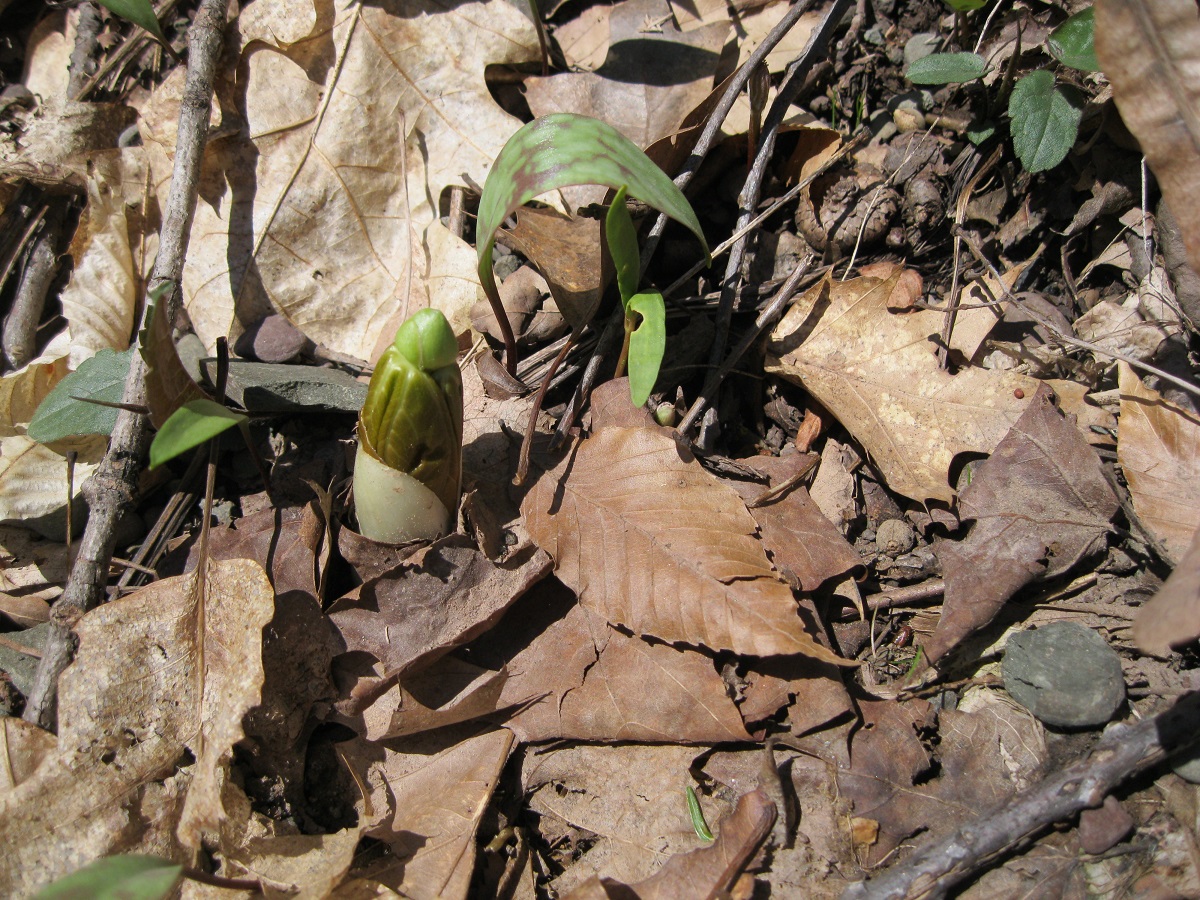
We have caught glimpses of Trillium plants pushing their tightly coiled leaves up into the air guessing at their identity. Today we are absolutely certain that we are looking at White trilliums. Showers are in the forecast so this bud's opening may be delayed.
In my youth growing up on eighteen acres that featured wooded streams at each edge of the land, I discovered a huge patch of these plants amongst the trees. Several stems were snapped off at ground level with the flowers presented to my Mother for Mother's Day. Her Mother told me that I was killing the plants since the nourishment providing leaves was also being removed. Lesson learned. We now enjoy these plants where they grow.
The two Trillium plants pictured here are minutes apart in unfolding their leaves. The plant to the left is beginning to loosen its leaves from the tight coil that protects the leaves as they are pushed up from the ground. The plant to the right has flattened its leaves while its bud remains out of sight. In the upper left corner of the picture, a Bloodroot is unwinding its leaf after the flower opened. In the center of the photo a single mottled Trout lily leaf means it will have no flower this year. Maturity is required for this plant to send up two leaves and a flower.
As many as five Trilliums fill this photo. Their flower display will be amazing. Leaves in the lower right corner belong to that nasty weed Goldenrod. Despite is small appearance its underground root system is massive. If I tried to pull it out, Trillium plants would also be uprooted. It would then be easy to steal those liberated plants away. That will not happen. The landowner's behavioral standards will be followed.
Our focus has been on Bloodroot and with their leaves unfurling that picture had to be included. The tulip shaped opening bud is presenting a new flower. The tattered remains of a flower to the left is perhaps only three days old. The next plant to the left shows no flower petals but is presenting the beginnings of a seed capsule even though its leaf is only now opening. It is difficult to understand my fascination with this plant when its time of flowering is so brief.
Two days following writing this post, the flower was found inverted on the ground. It was intact suggesting that a gust of wind lifted it free. The good news is that a seed capsule is now forming in spite of the single leaf still being rather tightly curled. It is amazing just how little time was needed to begin production of seeds insuring a next generation.
This is a new from seed plant in our home garden. Its heavy pollen load will soon be dispersed and perhaps a seed capsule will follow. The next generation is the reason flowers are formed. Their time open is short but they accomplish their mission.